Puzzles7 min read
Early finisher activities that do not need grading
Build a ready-to-use binder of early finisher activities with printable mazes, word searches, color by number and dot to dots kids can check themselves.
 By the 123arc teamPublished Oct 24, 2026
Contents
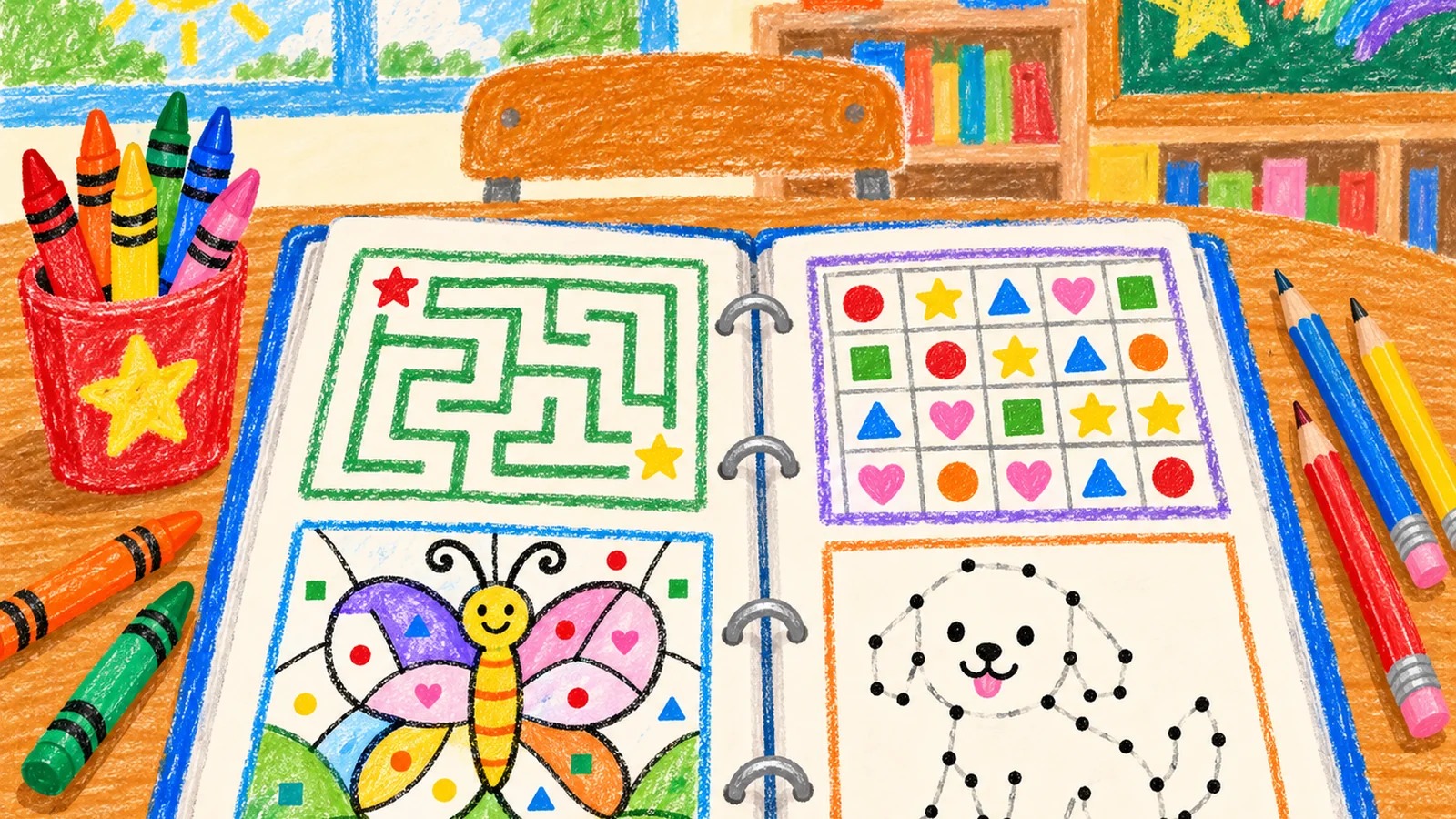
Early finisher activities give students something useful to do when they finish their classwork before everyone else. A small binder of printable mazes, word searches, color by number pages and dot to dots can keep children busy without adding another stack of papers for you to grade.
If you teach kindergarten through fifth grade, you probably know the moment: one student puts down a pencil while half the class is still working. These early finishers printables work best when students already know the routine, can choose an activity at their level and have a way to check their own work.
Build a binder students can use on their own
Start with a three-ring binder, a set of plastic sleeves and a folder for answer keys. Add a few activities students can complete without asking you for directions. You do not need dozens of pages on the first day. Begin with four or five choices, then add new ones as you see what your class enjoys.
I would organize the binder by activity type rather than putting every worksheet in one long stack. Students can flip to the section they want, take one page and return to the same spot when they finish. If you use reusable sleeves and dry-erase markers, some activities can be completed again without printing fresh copies.
Keep the directions short and consistent. A student who finishes early should know to check their assigned work, choose an available activity, work quietly and use the answer key when one is provided. Explain the routine during a calm part of the day, not while you are helping three other students.
- Mazes for pencil control and problem-solving
- Word searches using current spelling or vocabulary words
- Color by number pages for independent practice
- Dot to dots for number order and counting
- A small folder of answer keys for self-checking
Choose activities that need little or no grading
The best classroom time fillers have clear directions and an obvious stopping point. A completed maze has a visible path, a word search has words to find and a dot to dot produces a recognizable picture. Students can see when they have finished without handing you another assignment to mark.
Printable mazes are a good first choice for children who enjoy solving a problem. Use easy mazes for preschoolers for younger students who are still learning to follow a path, then offer printable mazes for kids with more turns as their skills grow. Keep a few easier pages available for days when a child is tired or needs a confidence boost.
Word searches fit naturally into your weekly vocabulary routine. Add a page using words from the current spelling list, science unit or social studies topic. Students get another look at familiar terms, and you do not have to create a separate quiz. For younger readers, choose a smaller grid with familiar words and clear lettering.
Color by number pages give students a quieter option when they need a break from written work. They still need to read the number key and match each number to a color, but the task feels different from another worksheet. Dot to dots are useful too, especially when the sequence reinforces counting or number recognition.
Level early finisher activities by grade
A binder works only when students can find something they can manage independently. A page that is too easy will not hold an older student's attention for long. One that is too difficult sends the child straight back to your desk for help. Label sections by grade band or difficulty, and let students choose from the level you have approved for them.
For kindergarten and early first grade, lean toward pictures, short paths, simple number sequences and word searches with a handful of familiar words. Children at this stage may still need reminders about how to use the binder, so choose pages with minimal reading and plenty of visual clues.
In second and third grade, introduce longer mazes, larger word searches and dot to dots with more numbers. You can use the vocabulary students are already learning, which gives them a little extra practice without turning the activity into a formal assignment. Color by number pages remain a useful choice for students who prefer a visual task.
For fourth and fifth grade, offer denser word searches, trickier mazes and number sequences that require closer attention. You can also add a challenge pocket with activities that take longer to complete. Keep the regular options available, though. Finishing early does not always mean a student wants a harder task.
Use this week's words in the word search section
A word search becomes more useful when the vocabulary comes from something students are already learning. Each Friday, choose a selection of words from the week's spelling list or a recent lesson. Create a puzzle with those words, print a matching answer key and place both in the binder section for the appropriate grade.
You can make a fresh puzzle with the word search maker rather than searching for a generic worksheet every week. Keep the word list at a manageable length for the students using it. Younger children need enough room to scan the grid, while older students may enjoy diagonal words or a larger puzzle.
For a science unit, use terms students have already discussed in class. For reading, use spelling words or names from a shared text when appropriate. The activity should feel familiar enough for independent work, not introduce ten new words that you then have to explain.
Rotate the vocabulary every week, but keep the instructions and binder layout the same. Students learn where to look and what to do, while you only need to replace a few pages. That small bit of preparation can save repeated interruptions during independent work.
Rotate the choices without creating more work
Students often return to the same activity if it is easy to find and enjoyable. That is fine for a while, but a binder with the same four pages all semester can lose its appeal. Keep the structure steady and change a small part of the content each week or every other week.
One simple rotation is to refresh the word search weekly, replace a few mazes every two weeks and change the color by number and dot to dot pages when students have seen them several times. Leave a handful of familiar favorites in place. Familiarity helps children work without needing fresh instructions each time.
You can also rotate by theme. Animal pictures might suit one month, while space or seasonal pages offer a change later. The animal coloring pages provide a visual option for students who enjoy coloring after finishing their required work. Use themed pages as a choice, not a reward that students must earn by racing through their assignments.
Watch how students use the choices. If a page leads to lots of questions, move it out until you can teach the directions. If a particular maze is completed in a minute by nearly everyone, save it for a younger group or replace it with a more challenging version. You do not need to rebuild the whole binder to keep it useful.
Set up answer keys and a clear self-check routine
Self-checking is what keeps early finisher activities from becoming another grading job. Put answer keys in a separate section, a labeled folder or a teacher-controlled location students can access after completing the page. For a maze, the key should show the correct route. For a word search, it should mark the hidden words. For dot to dots, show the completed picture when possible.
Teach students to finish the activity before looking at the key. They can compare their work, correct a mistake in a different color and return the page to the right pocket. If you want to keep a record, ask students to initial a simple tracking sheet after checking their work. You can glance at the sheet later without collecting every page.
Some activities do not have a single correct answer. Coloring pages are a good example. Those can go in a free-choice section, with no answer key needed. For tasks with a definite solution, make sure the key is easy to match to the correct page, especially if several puzzles look similar.
Set one firm rule: students should ask for help only after checking the directions and the key, if one is available. This will not eliminate every question, and that is fine. It gives children a routine to try first, so you can keep working with the students who need your attention.
Questions parents ask
What are good early finisher activities for kindergarten?
Try simple mazes, picture coloring pages and dot to dots with short number sequences. Choose pages with clear directions that children can follow without needing you to read every step.
How do I keep early finishers busy without grading more work?
Use activities with visible answers, such as mazes, word searches and dot to dots. Add answer keys and teach students to check their own work before choosing another page.
How many early finisher activities should I put in a binder?
Start with four or five activity types and enough pages to give students a real choice. Add new puzzles as you see which ones your class uses most, rather than printing a huge stack at once.
More from the blog
All articles Restaurant activities for kids: what to print before you goKeep kids busy at a restaurant with four easy printables, simple packing tips, and age-friendly ideas for toddlers and older children.
 Road trip activities for kids that fit on a clipboardKeep kids busy on long drives with printable scavenger hunts, trivia, dot to dots and mazes, plus a simple plan for screen time and breaks.
 Fall activities for kids with leaves, apples and pumpkinsPlan an easy fall afternoon with a leaf walk, coloring pages, apple counting, pumpkin mazes, a fall word search and a nature scavenger hunt.