Coloring8 min read
Benefits of coloring for kids, by age and skill
Learn the benefits of coloring for kids at each age, with practical page ideas for grip, pencil control, color choices, patterns and shading.
 By the 123arc teamPublished Oct 18, 2026

Contents
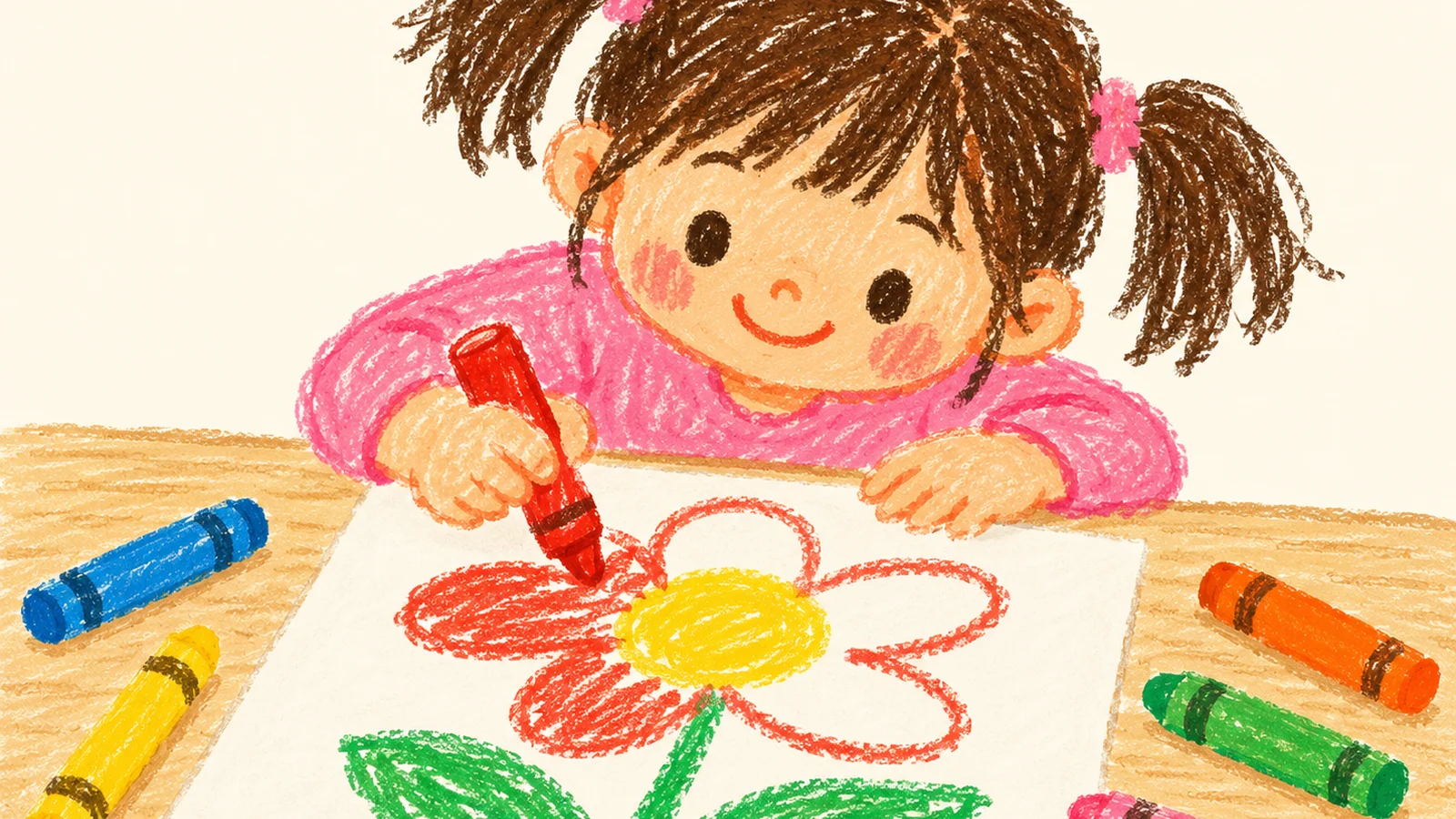
Coloring helps children practice holding crayons, controlling hand movements, noticing shapes and making choices about color. The benefits of coloring for kids change with age, from exploring marks on paper at 2 or 3 to experimenting with patterns and shading at 7 and beyond.
If you are a parent, preschool teacher or caregiver, the best coloring activity depends on what your child can do comfortably right now. A toddler needs large, open shapes, while an older child might enjoy detailed pictures or mandalas. You do not need to push for perfect results. Give your child a page that feels manageable, then let practice happen.
Ages 2 to 3: holding crayons and exploring pressure
At 2 or 3, coloring is mostly about discovering what a crayon can do. A child presses lightly and gets a pale mark, pushes harder and gets a darker one, or scribbles across the whole page. Those early experiments help children notice how their hand movements change what appears on paper.
This is also when coloring and fine motor skills begin to develop through ordinary play. Your child practices grasping a crayon, moving the wrist and arm, and coordinating what the eyes see with what the hand does. Do not expect a mature pencil grip. Young children often hold crayons in a fist or use their whole arm, and their control will vary from day to day.
What page should you offer? Choose one large object with a thick outline and plenty of blank space inside. A big apple, a simple fish or a round sun gives your child room to make marks without constantly running into tiny details. The Easy coloring pages for toddlers and preschoolers collection is a sensible starting point.
Keep the first sessions short, perhaps five minutes, and stop when your child loses interest. Chunky crayons can be easier for small hands to grasp than thin pencils. Stay nearby, use age-appropriate art supplies and supervise closely because crayons can break into small pieces.
- Offer one large shape rather than a crowded scene.
- Let your child scribble outside the lines without correction.
- Talk about the marks: light, dark, short or long.
- Praise the attempt instead of judging the finished picture.
Age 4: practicing control around the lines
Around age 4, many children begin to pay more attention to the edges of a picture. They may slow down near a border, turn the paper to reach a corner or try to fill an empty patch they missed. Staying inside the lines is a useful practice goal, but it is not a test every four-year-old should be expected to pass.
Coloring asks children to adjust their movements as the space changes. A broad area allows longer strokes, while a narrow tail or small circle calls for shorter, more careful movements. Children also practice looking back and forth between the crayon tip and the picture. These are useful parts of learning to manage a tool on paper.
Choose pages with a few clear shapes and thick outlines. A butterfly with large wings, a flower with broad petals or a friendly animal can offer enough detail to practice control without becoming frustrating. You can browse Butterfly coloring pages or Animal coloring pages for subjects children often recognize.
Try a simple invitation: ask your child to color one large section slowly, then let them finish the rest however they like. If they keep pressing so hard that the crayon snaps, show them how a lighter touch still leaves color on the paper. Avoid moving their hand for them unless they ask for help. The control needs to come from their own movements.
Ages 5 to 6: planning colors and making choices
By ages 5 and 6, many children can plan a little before they start. They might decide that every flower petal will be purple, the leaves will be green and the sky will stay blue. They may also notice when they have used the wrong color for their plan, then decide whether to change it or turn the mistake into something new.
Color selection gives children a chance to make decisions and follow them across a page. They practice remembering a plan, comparing shades and deciding where one area ends and another begins. These are modest tasks, but children often enjoy the feeling of having an idea and seeing it take shape.
For this age, pick pictures with several distinct areas that are large enough to color without too much strain. A garden, a rainbow, a house or a scene with familiar animals works well. If your child wants a little more structure, ask them to choose three crayons before beginning and decide where each one might go. Leave room for changes once they get started.
You can also use coloring as a gentle conversation starter. Ask why they chose orange for the cat or what color they think the background should be. There is no need to turn every picture into a lesson. If your child wants a pink dinosaur or a green sky, let the choice stand. Imagination is part of the activity, too.
Ages 7 and up: patterns, shading and detail
Older children often have the hand control to work with smaller shapes and repeat a pattern across a page. They can experiment with alternating colors, making sections symmetrical or changing a picture from light to dark. Some children love these challenges at 7, while others prefer large, bold designs for much longer.
Shading offers a new kind of experiment. A child can press gently on one side of a shape and harder on the other, or layer two colors to see what happens. With colored pencils, they can test how several light passes compare with one heavy stroke. Crayons work for simple pressure changes, too, although they produce a different texture.
Pattern coloring pages and mandalas can suit children who enjoy repetition and detail. A mandala has shapes arranged around a center, so children can repeat colors in different sections or invent their own sequence. Start with a design that has enough open space to work comfortably. A very dense page may feel satisfying to one child and exhausting to another.
Ask an older child what they want to try before handing over the page. Maybe they want to repeat two colors, make a section look shiny or shade a ball so it appears round. One small goal is plenty. Leave them free to experiment instead of correcting every uneven edge.
How to choose coloring pages by age
Age is a useful starting point, but the child's current skills and interests matter more than the number on a birthday cake. A five-year-old who dislikes detailed work may enjoy a toddler-style page, while a four-year-old who loves drawing might ask for something more complex. You can offer two choices and see which one gets picked.
Use the page itself to adjust the difficulty. Large shapes with thick outlines are easier to manage than tiny sections packed close together. A page with a few separate objects gives children more control over where to begin, while a detailed scene asks them to keep track of many areas.
A simple progression works well: start with one large shape, move to pictures with several sections, then try repeating patterns or mandalas when the child is ready. There is no deadline for moving up. If coloring becomes a battle, return to a simpler page or switch to drawing freely for a while.
You can keep a small stack ready for different moods. Use one easy picture for a quiet five-minute activity, a more detailed page for a longer afternoon and a favorite subject for days when your child needs an easy win. Let your child help choose the next printout.
- Ages 2 to 3: large shapes and open spaces.
- Age 4: clear outlines and a few broad sections.
- Ages 5 to 6: familiar scenes with several color areas.
- Ages 7 and up: patterns, mandalas and simple shading challenges.
What coloring teaches, and what it does not
Coloring can give children regular practice with hand movements, visual attention, color choices and staying with a small task. It can also offer a calm activity after school or while dinner is being prepared. Some children enjoy the quiet repetition, while others prefer to talk, listen to music or color alongside a sibling.
Still, coloring is not a shortcut to every school skill. A child does not automatically learn to write neatly by coloring pictures, and coloring alone will not teach reading, math or emotional regulation. Those skills develop through many kinds of experiences, including play, conversation, direct instruction and practice with the actual skill.
It is also fine if your child does not enjoy coloring. Try stickers, blocks, play dough, drawing, puzzles or other hands-on activities instead. If holding a crayon is consistently painful or unusually difficult, or if you have concerns about your child's hand skills, talk with their pediatrician or teacher rather than relying on coloring practice alone.
The best approach is to offer coloring without pressure. Put out a few crayons, choose a page your child can manage and let them decide how much to do. You can notice their effort without asking them to stay inside every line or finish the entire picture.
Questions parents ask
What are the benefits of coloring for kids?
Coloring gives children practice with grasping crayons, controlling hand movements, noticing shapes and choosing colors. The skills they practice depend on the page and their stage of development.
What age should a child start coloring?
Children can explore crayons and make marks around age 2, with close adult supervision and age-appropriate supplies. Begin with large, simple shapes and let your child set the pace.
Does coloring help with handwriting?
Coloring practices some hand control and visual coordination that children also use during writing. It does not teach letter formation or replace drawing, tracing, and direct handwriting practice.
More from the blog
All articles Number recognition activities for preschoolers with no prepTry easy number recognition activities for preschoolers ages 3 to 5, with coloring, counting, dot to dots and number hunts you can start today.
 First grade sight words: list and 12-week practice planGet the full Dolch first grade sight words list, compare it with Fry's first 100 words, and follow a simple 12-week reading plan.
 Letter of the week: a simple plan for pre-KUse this five-day letter of the week plan for pre-K with free printables, sound hunts, tracing, dot to dots, and easy Friday reviews.