Coloring8 min read
Easter activities for kids beyond the egg hunt
Try five easy Easter activities for kids, including printable egg designs, a spring word search, a backyard scavenger hunt and fun games.
 By the 123arc teamPublished Oct 21, 2026
Contents
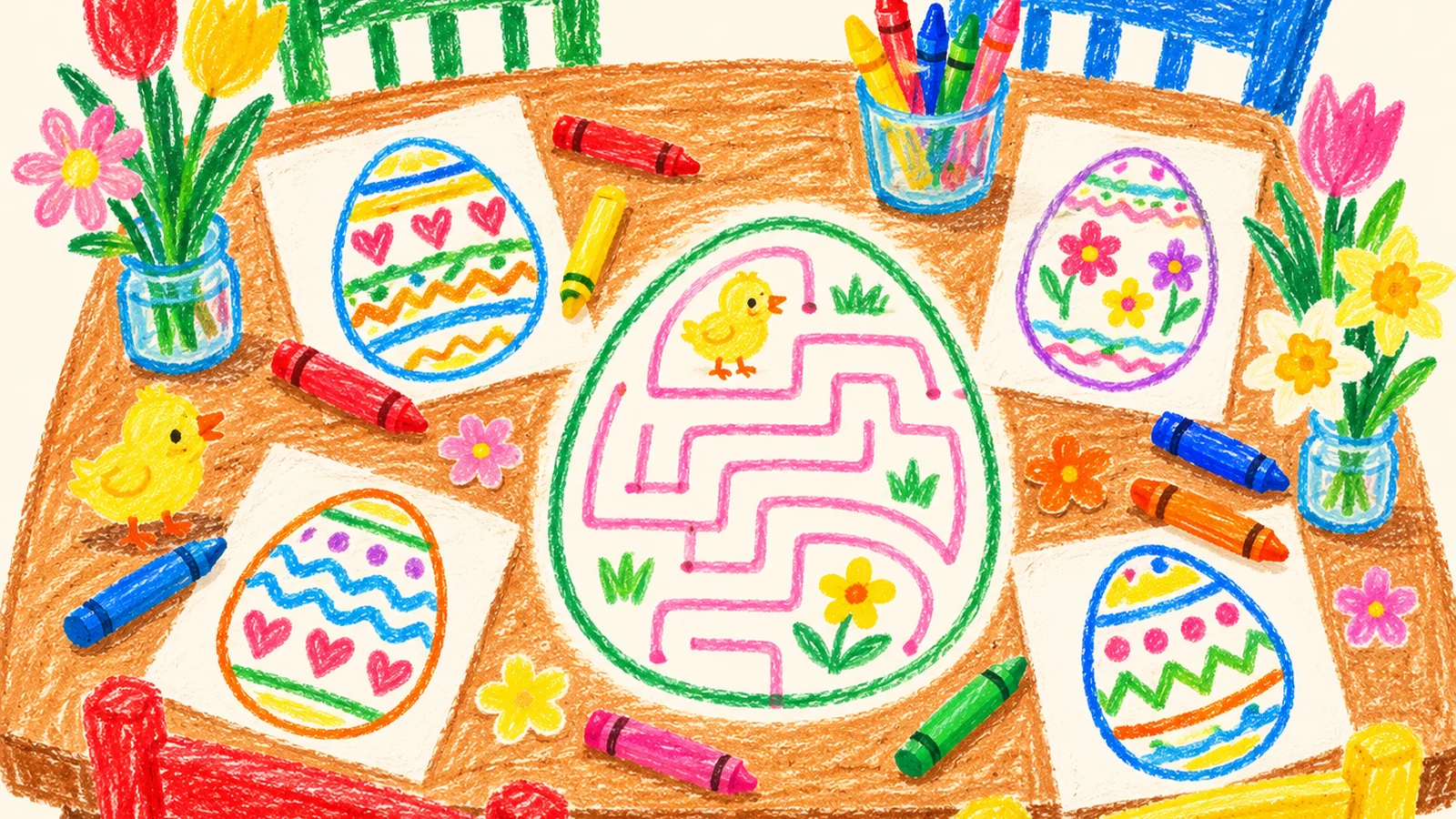
Easter activities for kids can be fun without a big party, expensive supplies or another egg hunt. Print a few egg coloring pages, solve a spring maze, search for seasonal words, explore the backyard and finish with a silly Easter question game.
These ideas work well for families, preschool classrooms and elementary school groups. Most need only paper, crayons and a pencil, so you can put together a relaxed Easter afternoon at home or prepare a few activities for a classroom party. Pick one or two for a short break, or combine all five for a full afternoon of spring fun.
1. Turn Easter egg coloring pages into decorating plans
Before you bring out the real eggs, let your kids design their dream Easter eggs on paper. Printable egg outlines give them room to try stripes, dots, flowers, zigzags and silly faces without worrying about cracked shells or spilled dye. You can find Easter egg coloring pages with simple shapes for younger children and more detailed patterns for older kids.
Try a small design challenge. Give each child three egg outlines and ask them to create one colorful egg, one egg inspired by spring flowers and one completely imaginary design. Set out crayons, colored pencils or washable markers, then let everyone explain their favorite pattern.
What if your child wants to decorate real eggs later? Use the finished pages as plans. Kids can copy their favorite colors and shapes onto hard-boiled eggs or craft eggs, and younger children can point to the design they want an adult to help recreate. The paper version also gives you a handy activity while the eggs cool.
For children who tire quickly, choose Easy coloring pages for toddlers and preschoolers with large areas to fill. Older kids might prefer Flower coloring pages for extra spring details. Print several copies so siblings can share the table without competing for the same page.
- A simple egg with three large stripes
- An egg covered in tiny dots and circles
- A spring egg with flowers, leaves and butterflies
- A silly egg with eyes, a smile and a funny hat
2. Make an egg-shaped maze challenge
A printable maze gives children a quiet Easter activity that still feels like a game. Choose an egg-shaped maze or draw a simple egg outline on paper and create a path from the bottom to a small basket at the top. Add a few dead ends, but keep the route clear enough for the child's age.
For preschoolers, use wide paths and only a handful of turns. A child who is just learning to control a pencil may enjoy tracing the route with a finger first, then trying again with a crayon. Children in kindergarten and the early grades can handle more branches and dead ends.
Make it a gentle challenge rather than a race. Ask your child to find the route without crossing any walls, then let them color the egg after they reach the finish. If they get stuck, suggest going back to the last turn instead of starting over. That small reminder can help a frustrated child keep trying.
You can find Printable mazes for kids for different skill levels. Print two copies of the same maze if siblings want to work side by side. They can compare routes when they finish, but there is no need to reward the fastest child. Getting through the maze is enough.
3. Take a spring word search to the table
A spring word search adds a little reading practice to the holiday without feeling like a worksheet. Choose a printable with seasonal words such as bunny, chick, flower, grass, nest and rain. Younger readers can look for a few short words with help, while confident readers can search a larger grid on their own.
Before handing over the pencil, read the word list together. Ask your child which words they recognize and which ones remind them of spring. A preschooler can hunt for a single letter or match a picture to a word, while a first or second grader can circle each complete word as they find it.
Keep the first round short, around 5 to 10 minutes, and stop if your child starts guessing randomly. You can always finish the puzzle after lunch. If the grid is too difficult, cover part of it with a blank sheet of paper so fewer letters compete for attention.
For a homemade version, use a Word search activity to prepare a puzzle with words your family already knows. Add the names of favorite spring animals or plants if your child wants a personal touch. For children who are not reading yet, say each word aloud and ask them to find its first letter.
4. Plan a backyard Easter scavenger hunt
A backyard scavenger hunt gets children moving after a stretch of sitting and coloring. Instead of hiding more candy-filled eggs, give them a list of things to find or notice outdoors. They might search for a green leaf, a smooth stone, a flower, a bird or something shaped like a circle.
Keep the rules simple. Read each clue aloud for younger children, or let older kids carry their own lists and check off each discovery. If you have several children, pair a beginning reader with someone who can read the clues. Everyone gets a job, and nobody needs to finish first.
Here are a few clues you can use without buying anything:
Look for a leaf that is green. Find something soft, such as a patch of grass. Spot a bird or listen for one. Find a tiny flower or a plant beginning to grow. Look for a stone that fits in your palm. Find something yellow, then something that makes you think of Easter.
You do not need a large yard. A porch, courtyard or nearby park can work just as well, provided the area is safe and permitted for children to explore. For an apartment or a rainy day, move the hunt indoors and use household objects instead. Set clear boundaries before you start, especially near roads, garden tools, ponds or unfamiliar plants.
A printable Scavenger hunt for kids can save you preparation time. For a group, print one sheet per child or read clues aloud and let everyone search together. Bring the activity to a close when interest fades, even if a few items remain unchecked.
5. Play would-you-rather Easter edition
A question game is a good choice for the car, the dinner table or the quiet part of an Easter party. No printer is required if you read the questions aloud, although you can write a few on slips of paper and let children pick them from a bowl. There are no wrong answers, so even a shy child can join in.
Start with funny choices and give each child time to explain their answer. You might ask whether they would rather have bunny ears for a day or a fluffy tail, eat carrot-shaped cookies or bunny-shaped pancakes, or search for hidden eggs in a garden or a magical forest.
Try these questions with your family:
Would you rather have a pet chick or a pet bunny? Would you rather decorate one giant Easter egg or ten tiny ones? Would you rather find a basket of books or a basket of art supplies? Would you rather hop everywhere for an hour or talk like a baby chick for a whole afternoon?
The best part is hearing the reasons behind each choice. A child might pick the giant egg because it could be painted like a dinosaur, or choose the books because they want a new bedtime story. Follow that answer with another question if the conversation is going well, but let children pass whenever they want.
For more ready-made ideas, use Would you rather questions for kids. Pick a handful that suit your children's ages and skip anything they find confusing. Five minutes of shared laughter can be plenty.
6. Put together an easy Easter activity afternoon
You can combine these Easter activities into a loose plan without scheduling every minute. Start with egg designs while everyone settles in, move to the maze and word search, then head outdoors for the scavenger hunt. Save the question game for snack time or the ride home.
For younger children, offer just two choices at once. Too many pages on the table can make it hard to decide where to begin. Older children may enjoy choosing their own order or helping write the scavenger hunt clues for younger siblings.
Keep supplies in one basket: printed pages, pencils, crayons, washable markers and a few blank sheets. Print only what you plan to use, and keep extra copies nearby in case a page gets torn or someone wants another turn. There is no need for themed decorations or special craft kits.
If the weather changes, you can still use most of the plan indoors. Replace the backyard search with an indoor hunt for a red object, something soft, a book with an animal on the cover and a toy that starts with the letter B. The children still get to move around and solve clues.
Let the kids decide which activity deserves a second round. One child may spend half an hour perfecting an egg design, while another wants to race through mazes or invent new questions. A flexible plan gives everyone room to enjoy Easter in their own way.
Questions parents ask
What are some easy Easter activities for kids at home?
Try egg coloring pages, a simple maze, a spring word search, an indoor scavenger hunt or an Easter question game. These activities need little preparation and use supplies many families already have.
What Easter printables are best for preschoolers?
Choose egg pictures with large spaces, mazes with wide paths and scavenger hunt clues that an adult can read aloud. Short activities with clear instructions usually work better than crowded worksheets.
How can I celebrate Easter with kids without an egg hunt?
Let children design paper eggs, solve a spring puzzle, search for natural objects outdoors or answer silly would-you-rather questions. You can mix two or three activities for a relaxed holiday afternoon without buying extra supplies.
More from the blog
All articles Christmas activities for kids while dinner cooksKeep kids busy while Christmas dinner cooks with easy printables, coloring pages, a tree maze, word searches, scavenger hunts and family trivia.
 Halloween activities for kids: a two-hour party planPlan a two-hour Halloween party for kids with printable games, pumpkin coloring, a scavenger hunt, word searches and age-friendly activities.
 Mandala coloring pages for kids: a calm 20-minute breakUse mandala coloring pages for kids to create a calm 20-minute break after school, with simple color rules and tips for choosing designs.