Coloring8 min read
Fall activities for kids with leaves, apples and pumpkins
Plan an easy fall afternoon with a leaf walk, coloring pages, apple counting, pumpkin mazes, a fall word search and a nature scavenger hunt.
 By the 123arc teamPublished Oct 22, 2026
Contents
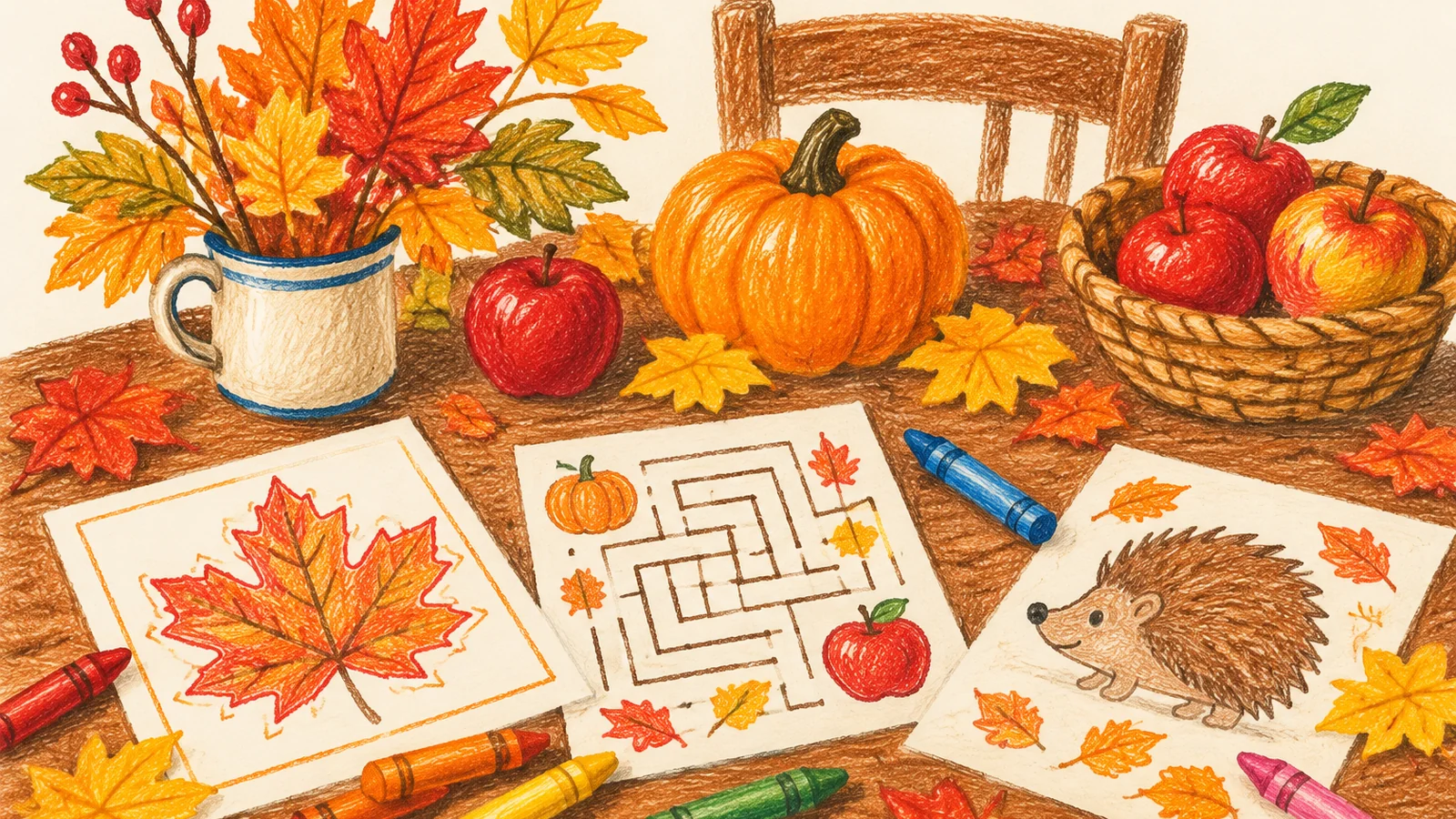
Fall activities for kids can turn an ordinary afternoon into a chance to explore, count, color and solve puzzles. Take a short walk to collect fallen leaves, then bring the colors and shapes home with printable activities about apples, pumpkins and autumn nature.
This plan works well for parents, preschool teachers and caregivers who want a little structure without spending hours preparing. You need a few printed pages, crayons, a pencil and somewhere to walk safely. Children ages 3 to 10 can join in, with simpler tasks for younger kids and extra challenges for older ones.
Start with a leaf walk around your neighborhood
Pick a mild afternoon and give your child 15 to 25 minutes to look for fallen leaves. You do not need a forest or a fancy nature trail. A sidewalk with a few trees, a schoolyard or a nearby park can offer plenty to notice. Ask your child to find a yellow leaf, a red or brown leaf, and one that has tiny holes or ragged edges. Let them choose their favorites rather than collecting every leaf they see.
Bring a small paper bag or a notebook to hold a few fallen leaves. Leave living leaves on their branches, and avoid plants you cannot identify. You can turn the walk into a simple observation game by asking which leaf feels smooth, which one crinkles, and which has the longest stem. For preschoolers, finding two leaves that look different is enough. Older children can compare their shapes and count the points along each edge.
When you get home, spread the leaves on a table and look at them together. Talk about the colors and shapes before anyone reaches for a crayon. If you have time, place one leaf under a sheet of paper and gently rub the side of a crayon over it to reveal the veins.
- Find three leaves in different colors.
- Choose one leaf with a smooth edge and one with a jagged edge.
- Count the leaves you collected and compare their sizes.
Pair the walk with fall coloring pages
Set out the leaves beside a printed coloring page and let your child choose the first color. The goal is to connect what they saw outdoors with what they put on paper. A toddler might fill a large leaf with orange crayon, while a kindergartner may try to copy the small lines branching through a real leaf. Neither needs to match a perfect picture.
For little hands, Easy coloring pages for toddlers and preschoolers offer a good place to start. Choose a design with large spaces and clear outlines if your child is still learning to hold a crayon. Older children may enjoy Fall coloring pages with more shapes and details. Ask them to use the real leaves as a reference, or let them invent a leaf color they have never seen.
Keep the activity short if attention starts to wander. Ten minutes of coloring can be plenty for a young child, and you can leave the page on the table for another turn later. Put the finished pictures beside the collected leaves, then ask your child to point out one detail they included from the walk.
Make apple counting feel like a game
Apples are an easy way to bring early math into a fall afternoon. Print or draw a row of apples, then ask your child to count them one at a time while touching each picture. For a preschooler, start with three apples and add more only when the first group feels comfortable. A child who already counts confidently can group the apples by color, compare two groups or work out how many remain after you cover one.
Try a quick pretend orchard. Draw five apples on a sheet of paper, then ask your child to circle two for a basket. How many are still on the tree? Let them mark the answer with fingers, counters or small paper scraps before writing a number. If writing is frustrating, skip the pencil and let them point. Counting is easier to understand when the child can move something or see the group change.
You can also use a printable number activity for a little more structure. Choose a page that matches the skill your child is practicing, rather than one that simply has the most pictures. For a younger child, identifying and counting up to five apples is a useful stopping point. Older children can count a larger group or make their own apple pattern, such as red, green, red, green.
Add a pumpkin maze for quiet problem-solving
After counting, offer a pumpkin maze as a change of pace. A maze asks children to slow down, look ahead and decide which path might lead to the exit. Print one page and give your child a pencil or crayon. Ask them to trace the route with a finger first, especially if they tend to rush and get stuck. If a path ends at a dead end, they can back up and try another direction.
For preschoolers, choose Easy mazes for preschoolers with broad paths and a clear start and finish. Children who can control a pencil more confidently may be ready for a maze with extra turns. There is no need to time the activity or turn it into a race. The point is to work through a small problem without an adult taking over at the first wrong turn.
What if your child gets frustrated? Cover part of the page with a blank sheet of paper so only the next section is visible, then ask which path looks promising. Offer a hint rather than drawing the answer. When the maze is finished, invite your child to color the pumpkin or draw a few leaves around it.
Use a fall word search to notice autumn words
A fall word search gives older preschoolers and elementary-age children a chance to look closely at letters. Pick a small puzzle with words such as leaf, apple, corn, tree and pumpkin. Before starting, read each word aloud and talk about what it means. Your child might recognize the first letter, spot a familiar short word or search for a longer word with your help.
Children who are just learning letters may do better with a simple matching activity before tackling a full word search. Write two or three words on scrap paper and let them find the same words on the page. For a first grader or older child, ask them to search across and down, then circle each word once they find it. Keep the puzzle nearby during the nature walk so the words connect to real things they have seen.
You can finish with a small conversation about the words. Which item did you find outside? Which one grows on a farm? Which word was the hardest to spot? A child who is not ready to read independently can still take part by naming pictures and matching spoken words to the letters on the page.
Finish with a nature scavenger hunt
Save the scavenger hunt for the last part of the afternoon, or use it to begin another short trip outside. Make a list of things your child can find without picking them up, such as a fallen leaf, a pinecone, a bare branch, a bird or a tree with red leaves. For a rainy day, adapt the hunt to what you can see through a window or spot on a covered porch. The goal is to notice the season, not to collect a bag full of objects.
For a ready-made activity, use the Outdoor scavenger hunt printable and adjust the instructions to suit your location. A younger child can point to each item while an adult checks it off. An older child can draw a quick picture beside each discovery or write the name of something they found. If you have several children, let them take turns choosing the next thing to look for.
Here is a simple way to connect the whole afternoon. Start with a 20-minute walk, spend 10 to 15 minutes coloring, then move to apple counting and a pumpkin maze at the table. Offer the word search or scavenger hunt if everyone still has energy. If your child is tired, stop after the coloring page and save the other printables for tomorrow. A good fall afternoon does not need every activity completed.
- A yellow or brown fallen leaf
- A tree with several colors of leaves
- A pinecone or interesting seed pod
- A bird or squirrel seen from a safe distance
- A branch with no leaves
- Something shaped like a circle
Questions parents ask
What are easy fall activities for preschoolers?
Try a short leaf walk, a large leaf coloring page and apple counting with three to five pictures. A simple scavenger hunt also works well because children can point to objects instead of reading instructions.
How do I plan fall activities for kids at home?
Print two or three activities before the afternoon starts and keep crayons and pencils on the table. Pair a short outdoor walk with coloring and one paper puzzle, then save the remaining pages for another day.
What fall printables are good for kindergarten?
Apple counting pages, easy mazes, fall coloring pages and short word searches suit many kindergarten children. Choose activities based on the skills your child is practicing, and offer help with reading or counting when needed.
More from the blog
All articles Christmas activities for kids while dinner cooksKeep kids busy while Christmas dinner cooks with easy printables, coloring pages, a tree maze, word searches, scavenger hunts and family trivia.
 Easter activities for kids beyond the egg huntTry five easy Easter activities for kids, including printable egg designs, a spring word search, a backyard scavenger hunt and fun games.
 Halloween activities for kids: a two-hour party planPlan a two-hour Halloween party for kids with printable games, pumpkin coloring, a scavenger hunt, word searches and age-friendly activities.