Puzzles10 min read
25 fine motor activities for preschoolers ages 3 to 5
Try 25 fine motor activities for preschoolers using paper, crayons and everyday play materials. Includes ages, supplies and activity times.
 By the 123arc teamPublished Nov 11, 2026

Contents
- What fine motor skills look like at ages 3, 4 and 5
- Crayon control: 6 activities for steadier hand movements
- Hand strength: 7 activities for squeezing and gripping
- Two hands working together: 6 activities for coordination
- Finger isolation: 6 activities for individual finger control
- How often to practice and when to ask for advice
- Questions parents ask
Fine motor activities for preschoolers help children use their fingers, hands and wrists for everyday tasks. Coloring big shapes, squeezing playdough, picking up pom-poms with tongs and tearing paper all give little hands useful practice.
If you have a 3, 4 or 5 year old at home or in your classroom, you do not need special equipment to get started. These 25 activities use simple household and classroom materials, with suggested ages and play times so you can choose something that suits your child's current abilities.
What fine motor skills look like at ages 3, 4 and 5
Fine motor skills involve the smaller movements of the hands and fingers. Your preschooler uses them to hold a crayon, turn a page, pick up a small object, open a container or manage a pair of child-safe scissors. These movements take practice, and children do not all develop them at the same speed.
At age 3, your child might enjoy making large crayon marks, stacking blocks, squeezing soft dough and turning chunky puzzle pieces. Their grip may still change during an activity. Some children can snip paper with scissors, while others are still getting comfortable holding them.
By age 4, many children can draw simple shapes, handle smaller play materials, use scissors for short cuts and thread larger beads. At 5, children often have better control when coloring, cutting along simple lines and using both hands together. These are general expectations, not a checklist your child must pass.
Does your preschooler switch hands or hold a crayon in an unusual way? That alone does not tell you something is wrong. Give them time, offer different materials and watch how comfortably they manage everyday play.
Crayon control: 6 activities for steadier hand movements
Crayons, simple drawing games and paper activities give children a reason to move their hands with care. Start with large shapes and generous spaces. Small pictures with lots of tiny details can frustrate a preschooler who is still learning to control their marks.
You can find suitable starting pages in Easy coloring pages for toddlers and preschoolers and Coloring pages for kids. Choose pictures with thick outlines and plenty of room for coloring. Keep the first session short, especially for a child who tires quickly.
- Dot to dot pictures. Ages 4 to 5. Materials: simple dot to dot printables, chunky crayons or markers. Time: 5 to 8 minutes. Let your child connect a few numbered dots at a time. Younger children can simply follow the dots without worrying about numbers.
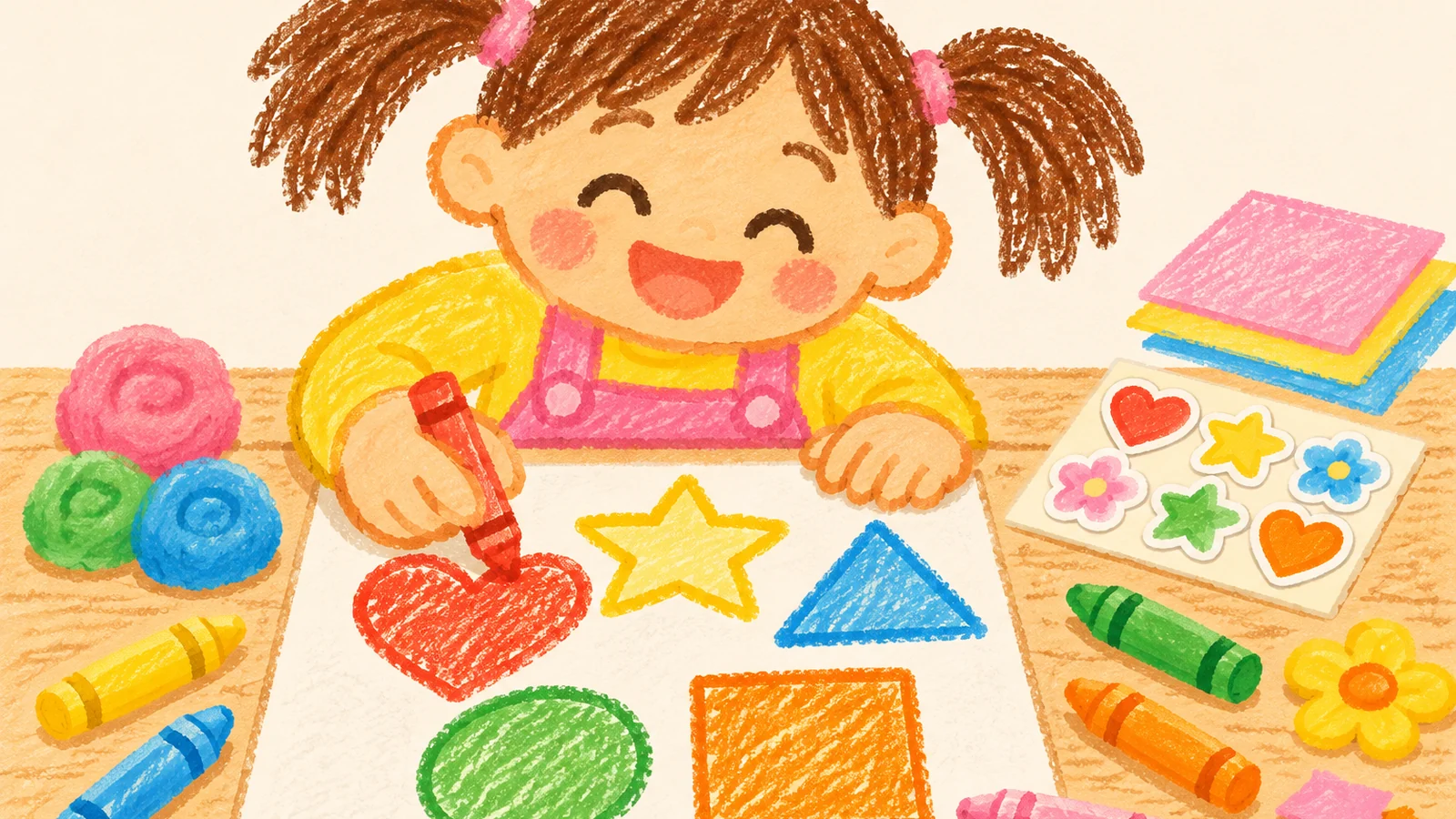
- Big-shape coloring. Ages 3 to 5. Materials: large coloring pictures, washable crayons. Time: 5 to 10 minutes. Offer circles, houses or animals with thick outlines. Encourage your child to fill a section rather than asking them to stay perfectly inside every line.
- Easy paper mazes. Ages 4 to 5. Materials: printed maze, crayon or pencil. Time: 5 to 8 minutes. Pick a maze with wide paths and only a few turns. Your child can move a finger through the route first, then draw the path.
- Draw around a lid. Ages 3 to 5. Materials: paper, large plastic lids, chunky crayons. Time: 5 minutes. Help your child hold a lid still while drawing around it. They can turn the paper to make more circles.
- Sticker road drawing. Ages 3 to 5. Materials: paper, large stickers, crayons. Time: 7 minutes. Place stickers around the page and ask your child to draw roads connecting them. The stickers give them clear places to aim for.
- Color a simple picture in sections. Ages 4 to 5. Materials: printable picture, crayons in two or three colors. Time: 8 to 10 minutes. Ask your child to choose a color for each large area. Let them decide where to begin.
Hand strength: 7 activities for squeezing and gripping
Little hands need strength to hold crayons, manage utensils and handle small objects. Squeezing, pinching and pressing are useful ways to practice these movements during play.
Playdough is one of my favorite starting materials because children can change what they are doing whenever they like. A child who is not interested in making shapes might happily spend ten minutes rolling and squashing dough instead. Supervise small loose materials, especially with younger preschoolers.
- Playdough squeezing. Ages 3 to 5. Materials: homemade or store-bought playdough. Time: 5 to 10 minutes. Ask your child to squeeze a ball with both hands, flatten it and roll it again. Keep the dough soft enough for little fingers.
- Playdough cutting. Ages 3 to 5. Materials: playdough, child-safe plastic cutter. Time: 5 to 8 minutes. Roll the dough into thick strips and let your child press the cutter down. This combines hand strength with simple tool control.
- Pom-pom tong transfer. Ages 4 to 5. Materials: large pom-poms, child-safe tongs, two bowls. Time: 5 to 8 minutes. Move the pom-poms from one bowl to another. Choose tongs that open easily, and supervise the activity.
- Sponge squeezing. Ages 3 to 5. Materials: clean sponge, two shallow bowls, water and a towel. Time: 5 to 10 minutes. Dip the sponge into water and squeeze it over the empty bowl. Stop before the floor becomes slippery.
- Spray bottle painting. Ages 4 to 5. Materials: child-safe spray bottle, water, washable paint or colored water, large sheet of paper. Time: 5 to 8 minutes. Let your child squeeze the trigger to spray the paper. Use an adjustable bottle that is easy for small hands to operate.
- Clothespin color match. Ages 4 to 5. Materials: large spring clothespins, colored card. Time: 5 to 7 minutes. Clip each clothespin onto a matching color. Check that the clips are easy to open and do not pinch too hard.
- Crumple paper balls. Ages 3 to 5. Materials: scrap paper, empty cardboard box. Time: 5 minutes. Tear or hand out paper squares and let your child squeeze each one into a ball. Toss the balls into the box when they are ready.
Two hands working together: 6 activities for coordination
Some activities ask one hand to hold something steady while the other hand does the work. This is called bilateral coordination. You can see it when a child holds paper while cutting, keeps a container still while opening it or holds a lace while threading a bead.
Offer materials that are easy to grip. If your child gets frustrated, hold the paper or container steady for the first few turns, then give them another chance to do it independently.
- Snip paper strips. Ages 3 to 4. Materials: child-safe scissors, wide strips of paper. Time: 5 minutes. Show your child how to open and close the scissors for short snips. An adult should supervise closely and manage the paper if needed.
- Cut along a wide road. Ages 4 to 5. Materials: paper with thick straight lines, child-safe scissors. Time: 5 to 8 minutes. Ask your child to cut along one short line. Keep the paper close to their hands so they can turn it as needed.
- Paper tearing collage. Ages 3 to 5. Materials: colored scrap paper, glue stick, large sheet of paper. Time: 8 to 10 minutes. Use both hands to tear paper into pieces, then stick the pieces onto the larger sheet. There is no need for matching shapes.
- Thread large beads. Ages 4 to 5. Materials: large beads, thick lace with a firm end. Time: 5 to 8 minutes. Hold the lace in one hand and guide each bead with the other. Use age-appropriate beads and supervise closely because small objects can be choking hazards.
- Lacing card pictures. Ages 4 to 5. Materials: sturdy card with large punched holes, thick shoelace. Time: 5 to 10 minutes. Push the lace through one hole and pull it through the next. Start with only four or five holes.
- Open and close containers. Ages 3 to 5. Materials: clean plastic containers with easy lids. Time: 5 to 7 minutes. Ask your child to open a container, place a large toy inside and close it again. Try different lid styles without using tight or difficult caps.
Finger isolation: 6 activities for individual finger control
Finger isolation means moving one finger without moving all the others in the same way. It helps children develop control for pointing, pressing, picking up small objects and using tools. You can practice it through short games rather than formal exercises.
Keep these activities playful. Some children love stickers and paint, while others would rather press buttons or play with a soft toy. Follow your child's interest and let them take breaks.
- Sticker picture scenes. Ages 3 to 5. Materials: large stickers, paper. Time: 5 to 8 minutes. Peel stickers and place them around the page to make a garden, road or animal scene. Let your child use one finger to press each sticker down.
- Finger painting dots. Ages 3 to 5. Materials: washable finger paint, thick paper, smock. Time: 5 to 10 minutes. Dip one fingertip into the paint and make dots across the page. Try different fingers if your child is comfortable.
- Fingerprint animals. Ages 4 to 5. Materials: washable paint, paper, crayons. Time: 8 to 10 minutes. Make a few fingerprints and turn them into simple animals with crayon details after the paint dries.
- Push playdough buttons. Ages 3 to 5. Materials: playdough, large toy buttons or chunky counters. Time: 5 minutes. Press the objects gently into the dough with one finger at a time. Keep the objects large enough for safe supervised play.
- Sticker peeling race. Ages 4 to 5. Materials: large removable stickers, paper. Time: 5 minutes. Place several stickers on a sheet and ask your child to peel them off one at a time. There is no need to race against a clock.
- Finger path game. Ages 3 to 5. Materials: paper, washable marker. Time: 5 minutes. Draw a few large winding paths and let your child follow them with one finger. Add dots where they should stop and start.
How often to practice and when to ask for advice
You do not need to complete all 25 activities in one week. Try one or two short activities during the day, perhaps while you prepare dinner or before story time. Five minutes of happy play is a better choice than twenty minutes of pressure.
Look at how your child handles ordinary tasks as well as planned activities. Can they pick up food, turn pages, manage simple toys or hold a crayon long enough to make a picture? Progress often shows up in these everyday moments before a child can complete a more structured activity.
When should you mention a concern? Talk with your child's pediatrician or preschool teacher if you notice persistent difficulty using their hands during everyday activities, unusual frustration with simple tasks, trouble using both hands together, or a loss of skills they previously had. You do not need to wait until school age to ask.
A teacher may be able to tell you whether the same difficulties appear during classroom play. Your pediatrician can discuss your concerns and decide whether further assessment or support is appropriate. Avoid comparing your child with a sibling or another preschooler. Their progress may look different.
For your next activity, choose something your child already enjoys and make it a little more challenging. If they love stickers, try placing them along a drawn path. If they prefer dough, add a safe plastic cutter. Keep the play relaxed and let your child lead.
Questions parents ask
What are the best fine motor activities for 3 year olds?
Start with playdough squeezing, large-shape coloring, paper tearing, stickers and sponge squeezing. These activities let children practice hand movements without needing precise control.
How long should preschoolers do fine motor activities?
Try 5 to 10 minutes at a time, depending on your child's interest and energy. You can offer another activity later in the day rather than expecting a long session.
When should I worry about my child's fine motor skills?
Speak with your pediatrician or preschool teacher if your child consistently struggles with everyday hand tasks, seems unusually frustrated by them or loses skills they previously had. They can help decide if further assessment is needed.
More from the blog
All articles 2nd Grade Sight Words: Full List of 46 and Weekly PlanFind all 46 Dolch second grade sight words, see how they differ from first grade words, and follow a simple 10-week practice plan.
 100 clean jokes for kids, sorted by age and easy to tellNeed a giggle? Try 100 clean jokes for kids, sorted by age, with silly preschool laughs, clever puns, school jokes and animal jokes.
 Winter would you rather questions for kids to printGet 60 winter would you rather questions for kids, sorted into five fun categories. Print them for indoor recess, snowy mornings or family game time.