Games9 min read
Indoor recess games: 25 ideas for rainy and snowy days
Keep kids busy during rainy-day recess with 25 indoor games for kindergarten through fifth grade, plus printable activities and easy classroom setup tips.
 By the 123arc teamPublished Nov 18, 2026
Contents
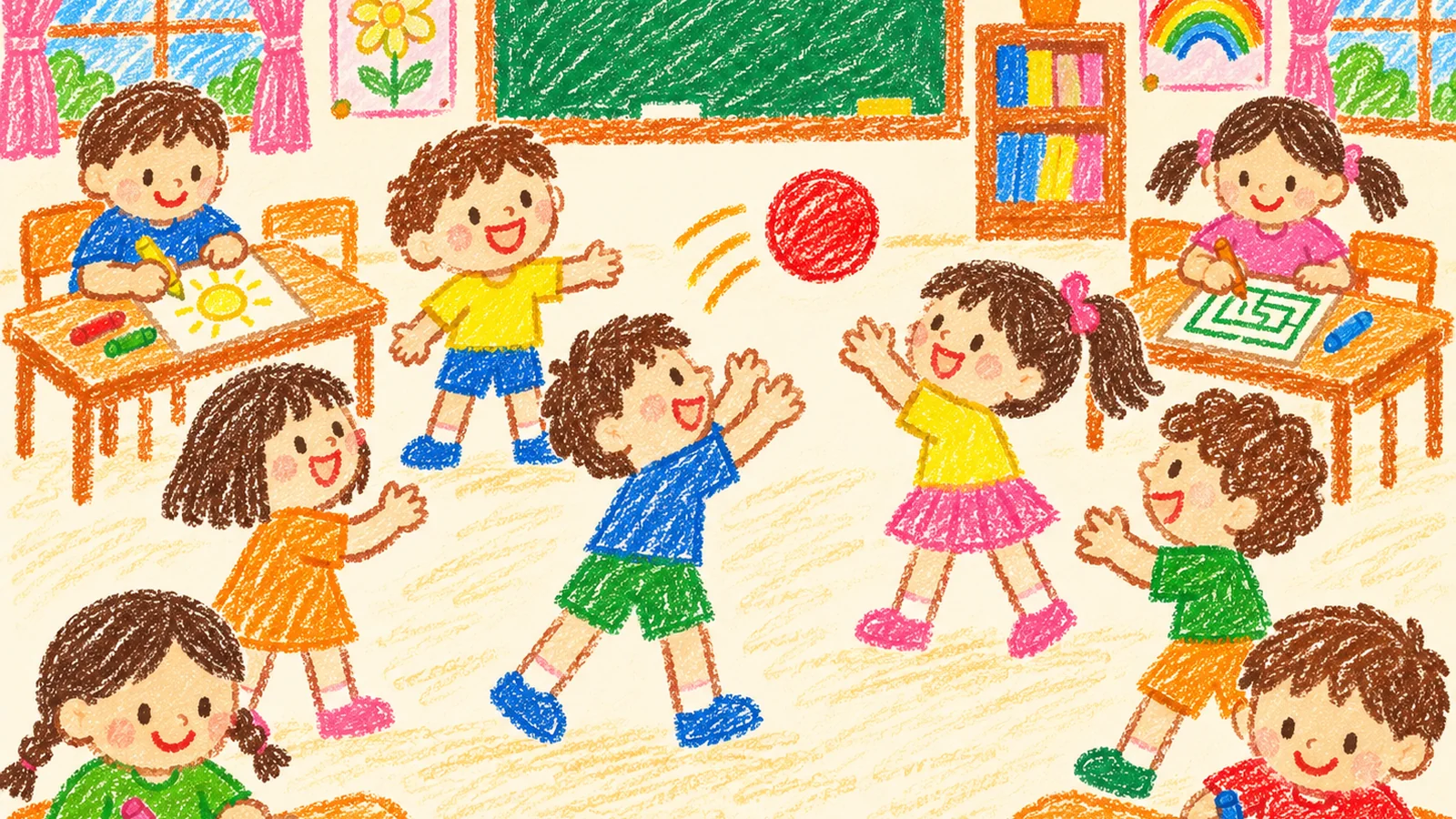
Indoor recess games give kids something fun to do when rain, snow or freezing temperatures keep everyone inside. These 25 classroom games fill a full 20 to 30 minute recess, with choices for the whole class, small groups and children who prefer quiet activities.
If you teach kindergarten through fifth grade, you know that an indoor recess can get noisy fast. I like having a few games ready before the weather turns. The trick is to offer choices without turning your classroom into another lesson.
How to set up an indoor recess that runs smoothly
Start with an indoor recess bin. Use a plastic storage tub or a sturdy cardboard box and keep it somewhere you can reach without digging through classroom supplies. Add playing cards, dice, scrap paper, pencils, a soft ball, a timer and a few printed activity sheets.
Put the rules for each game on one small card. Write the game name, the number of players, what you need and the basic instructions. Children can pick a card and get started while you handle attendance, clean up or another classroom task.
Set a clear end time before anyone starts. For a 25-minute recess, give children about 20 minutes to play and five minutes to put everything away. Give a two-minute warning so they can finish a round instead of abandoning a game halfway through.
One more thing: keep the walking paths clear. Move chairs in slightly, mark off play areas and leave the running games for another day. Indoor recess needs movement, but nobody needs a collision with a desk.
- A soft ball for gentle tossing games
- Playing cards and dice for small groups
- Printed mazes and word searches
- Pencils, crayons and scrap paper
- Game instruction cards and a classroom timer
Whole-class indoor recess games
These games work well when you want everyone involved at once. Most need very little equipment, and you can adjust the rules for younger children or a crowded classroom.
Four Corners is a favorite because it gets children moving without running. Label the four corners of the room with numbers or colors. One child closes their eyes and counts while everyone else chooses a corner. The caller announces a corner, and those children sit down. Keep playing until one child remains.
Silent Ball is a good choice when the class needs something calmer. Children stand or sit with enough space to toss a soft ball gently to one another. If someone drops the ball, throws it too hard or talks, they sit out for the next round. Use a foam ball and remind everyone to aim below the shoulders.
Try these other whole-class games when you have 20 minutes to fill:
Would You Rather? Ask questions such as whether children would rather explore a jungle or visit the moon. Let them move to one side of the room for their answer, then invite a few children to explain their choice.
Simon Says gives younger students a chance to follow directions and move. Use simple actions such as touching your toes, standing on one foot or pretending to swim.
Heads Up, Seven Up works for classes that know the rules. Choose seven children to walk around and gently tap classmates' thumbs. The selected children guess who tapped them.
The Human Knot works best with a smaller class group. Children stand in a circle, hold hands with two different people and work together to untangle themselves without letting go. Skip it if the room is too crowded.
Freeze Dance needs a little music and a clear stopping signal. Children dance in their own spaces while music plays, then freeze when it stops. Anyone who moves can sit out one round before joining again.
- Four Corners
- Silent Ball
- Would You Rather?
- Simon Says
- Heads Up, Seven Up
- The Human Knot
- Freeze Dance
Small-group games for classroom tables
Small-group games are useful when your classroom has different activity areas or when children would rather play with three or four friends. Set out the materials before recess and let each group choose a table.
Try a paper airplane challenge with scrap paper. Children fold their own planes and take turns flying them from a marked starting line. Keep flights low and away from other groups. You can judge the longest flight or simply let everyone experiment with different folds.
Dice drawing is another easy option. Assign a simple feature to each number, such as a head, body, legs, eyes, mouth and accessories. Each child rolls the dice and adds the matching feature to a drawing. The finished characters are usually funny, which is part of the appeal.
For a guessing game, play 20 Questions. One child thinks of an animal, object or person, and the group asks yes-or-no questions until someone guesses correctly. Younger children can use an animal-only category to make the game easier.
Try a few more games that need little preparation:
Build the tallest paper tower using sheets of scrap paper. Give each group the same number of sheets and let them test different folds.
Play a memory game with classroom objects. Show five objects, cover them with a cloth, then ask children to name what they remember.
Make a group story by having each child add one sentence. Give the first child a setting and let the story become as silly as the group wants.
Play a simple card game such as Go Fish or matching pairs. Keep a short instruction card with the deck for children who already know how to play.
- Paper airplane challenge
- Dice drawing
- 20 Questions
- Paper tower challenge
- Classroom object memory game
- Group storytelling
- Go Fish or matching pairs
Quiet table games for calmer indoor recess
Some children need a quieter option after a busy morning. A table activity gives them somewhere to settle without asking them to sit through another worksheet or teacher-led task.
Try tic-tac-toe on scrap paper. Children can play several rounds and switch partners when they finish. Younger students can use larger grids and crayons to make the squares easier to see.
Dots and Boxes is another good pencil-and-paper game. Draw a grid of dots, then take turns connecting two neighboring dots. The player who completes a box writes their initial inside it. The player with the most boxes at the end wins.
For children who enjoy drawing, start a collaborative picture. One child draws a simple shape, then passes the paper to the next person, who turns it into something new. You can also put out blank paper for independent doodling.
Want a few ready-to-print choices? Our Cute coloring pages give younger children something cheerful to work on. For a broader selection, try Coloring pages for kids or Easy coloring pages for toddlers and preschoolers. Put a small stack in the recess bin so children can choose without waiting for you.
- Tic-tac-toe
- Dots and Boxes
- Collaborative drawing
- Independent doodling
- Coloring pages
Printable indoor recess activities children can start alone
Printables are especially handy when you need a few children to get started without asking you for instructions. Put several different activities in plastic sleeves or folders and let children pick one. They can work independently or sit with a partner.
Mazes are a good starting point. Younger children can follow wide paths, while older students can tackle more complicated routes. Try our Printable mazes for kids and keep a few different difficulty levels in the same folder.
Word searches work well for children who enjoy finding patterns in letters. Choose familiar words for younger readers and longer word lists for older students. The Word search printable page is a useful place to find an activity for a quiet table.
Would You Rather cards can keep a small group talking without needing a board or pieces. Children take turns reading a question and explaining their answers. You can print questions from Would you rather questions for kids and place them in a small envelope.
For children who want to move around, prepare an indoor scavenger hunt. Give each child a sheet with things to find around the classroom, such as something round, something blue or something made of paper. Our Indoor scavenger hunt printable is a useful starting point. Set clear boundaries so children know which areas they can visit.
I would keep at least four types of printables in the bin. A child who does not feel like solving a maze might happily color a picture or search for words instead. Choice makes a difference, especially when everyone has been stuck inside all morning.
- Mazes for different ages
- Word searches
- Would You Rather question cards
- Indoor scavenger hunts
- Coloring sheets
How to choose games by grade and end recess on time
Kindergarten and first grade students usually do best with games that have one or two simple rules. Try Simon Says, Four Corners, coloring sheets and easy mazes. Demonstrate the game once before letting children take over.
Second and third graders can handle games with a little more strategy. Silent Ball, Go Fish, Dots and Boxes, word searches and paper airplane challenges give them room to make choices without much adult help.
Fourth and fifth graders often enjoy challenges that let them compete or work together. Try 20 Questions, paper tower building, harder mazes and group storytelling. Let them take responsibility for explaining the rules to their group.
What if you have several grades in one room? Offer two or three activity choices at different difficulty levels. Older children can help younger classmates with a game, but they should still have the option to choose something independently.
For a 20 to 30 minute recess, use a simple schedule. Spend the first two minutes choosing activities and getting materials. Give children 15 to 20 minutes to play, then use the final three to five minutes for cleanup and a quick check of the room.
Keep the same routine every time bad weather cancels outdoor play. Once children know where the bin is, how to choose a game and when to clean up, you will spend less time explaining and more time letting them enjoy their break. Pick your first five games and put their instruction cards in the bin before the next rainy day.
Questions parents ask
What are the best indoor recess games for kindergarten?
Four Corners, Simon Says, Freeze Dance and simple coloring activities are good choices. Keep instructions short and choose games that do not require reading.
How do you keep indoor recess from getting too loud?
Offer quiet table activities alongside one or two movement games. Silent Ball, mazes, coloring and word searches give children options without filling the room with noise.
How long should indoor recess last?
A 20 to 30 minute block gives children time to choose an activity, play and clean up. Give a two-minute warning before the end so they can finish their game.
More from the blog
All articles 30 Activities for 4 Year Olds That Make Learning FunTry 30 activities for 4 year olds that build early reading, counting, creativity and motor skills through puzzles, games, art and pretend play.
 Tongue twisters for kids from easy to trickyTry 50 tongue twisters for kids, sorted by age and difficulty. Find funny phrases, classic challenges and holiday favorites for family or classroom fun.
 Preschool sight words: when to start and what to teachFind the 40 Dolch pre-primer sight words, a shorter starter list, signs your child is ready, and five playful ways to practice at home.