Learning8 min read
Letter of the week: a simple plan for pre-K
Use this five-day letter of the week plan for pre-K with free printables, sound hunts, tracing, dot to dots, and easy Friday reviews.
 By the 123arc teamPublished Oct 17, 2026
Contents
A letter of the week plan gives your preschooler five short activities to practice one letter at a time. Start with a coloring page on Monday, hunt for the letter's sound on Tuesday, trace it on Wednesday, connect the dots on Thursday, and review it on Friday.
This routine works well for pre-K families, preschool teachers, and caregivers who want to build early reading skills without turning every afternoon into a lesson. You can use free printable activities, household objects, and a few crayons. If your child is three and still learning to hold a crayon, keep things playful. If your child is five and already recognizes several letters, add a little more sound practice.
How to plan a letter of the week
Choose one uppercase and one lowercase letter to explore together. For example, if your letter is M, show your child M and m, say the letter name, and make its sound. You do not need to teach every detail in one sitting. Let your child see the letter several times during the week.
Set aside about 10 to 15 minutes each day. Some children will finish a printable in five minutes and want to play with the crayons. Others will spend longer drawing a picture or talking about the objects they find. Both are fine.
Keep a small folder for the week's work. Put Monday's coloring page, Wednesday's tracing sheet, and Thursday's dot to dot inside. On Friday, look through the pages together and ask your child which activity they liked best. The folder gives you a simple record of what your child has practiced.
- One letter in uppercase and lowercase
- A few crayons or washable markers
- Printed activity pages and a pencil
- Three or four familiar objects to use for sound practice
Monday: color the letter
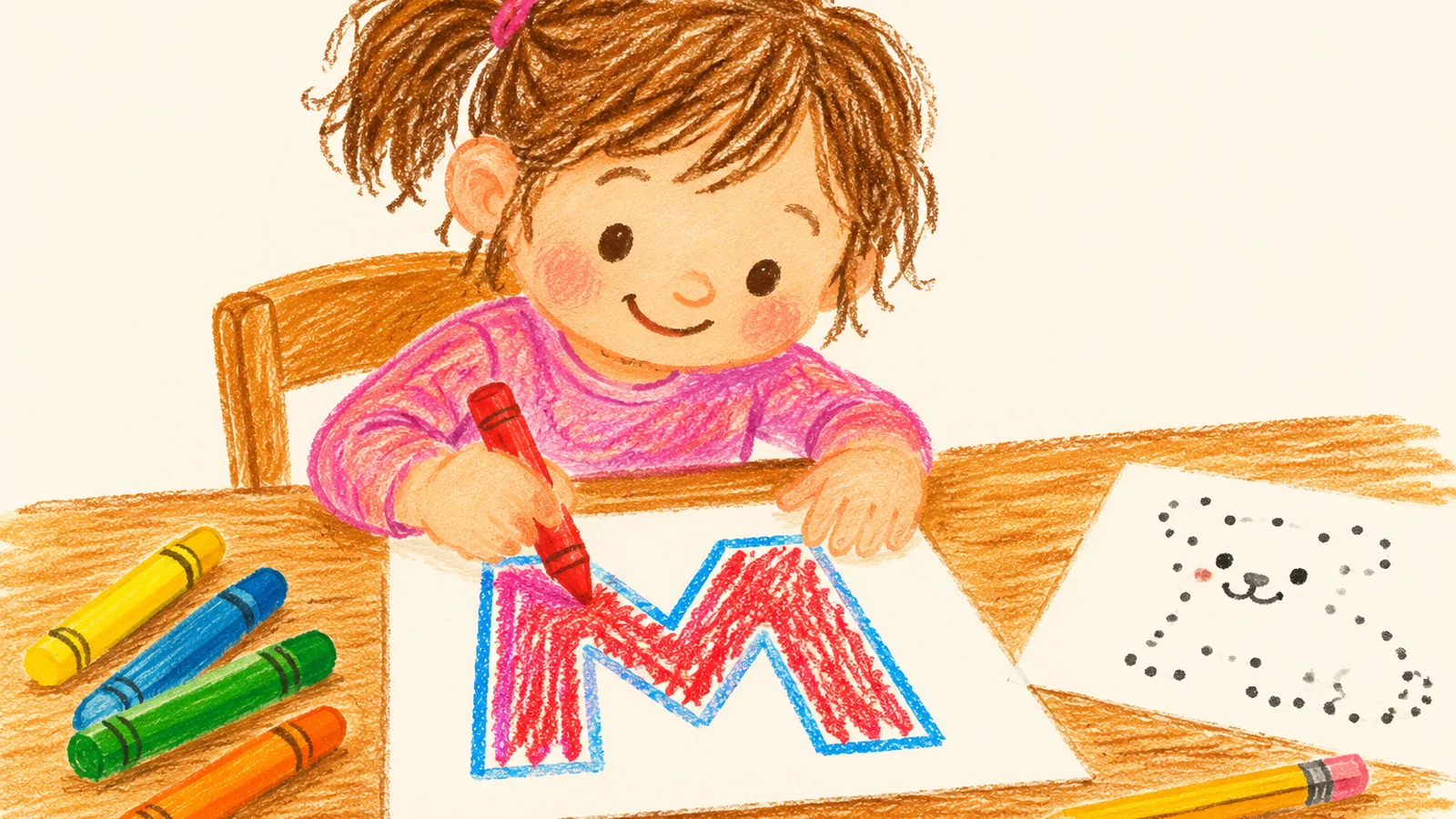
Begin the week with a coloring activity. Print a large letter M, for example, and let your child color it while you say its name and sound. Point to the letter as you speak. Keep the conversation short and relaxed rather than asking your child to repeat you over and over.
The free Alphabet coloring pages are a useful starting point. Choose a page with a large, clear letter and a picture connected to its sound, such as a moon or a mouse for M. If your child is still getting used to crayons, try Easy coloring pages for toddlers and preschoolers, which offer a gentler starting point for early coloring practice.
What if your child colors the whole page without saying the letter? That is fine for a first activity. You can name the letter as you color beside them, then ask them to point to it once before putting the page away. Avoid correcting every mark or insisting that the picture stay inside the lines.
Tuesday: go on a letter sound hunt
Today, look for things that begin with the week's sound. For S, you might find a sock, spoon, or shoe around the house. For B, try a book, ball, or bag. Say each word slowly and emphasize the first sound, then invite your child to find another object.
Start with three objects you know your child can identify. Put them on a table and ask, "Which one starts with S?" If that feels too hard, name each object yourself and stretch the beginning sound a little. Your child can point instead of answering aloud.
You can also take the activity into the kitchen, bedroom, or backyard. Keep the focus on the first sound, not on whether a child can spell the word. The letter C, for example, can represent different sounds in different words, so choose clear examples when you are introducing it.
Finish by drawing one object together and writing the target letter beside it. There is no need for a worksheet today. The point is to connect a letter on paper with a sound your child hears in ordinary words.
Wednesday: trace uppercase and lowercase letters
Midweek is a good time to practice how the letter is formed. Show your child a large uppercase letter first, then its lowercase partner. Trace each one with your finger before picking up a pencil. You can describe the movement in simple words, such as "down, across, down" for a capital H.
Use Primary handwriting paper printable if your child is ready to make letter shapes on lines. For a younger preschooler, draw a large letter on plain paper and let them trace it with a finger, a toy car, or a small object before trying a crayon. These activities build familiarity without demanding neat handwriting.
Children develop pencil control at different rates. A child who grips the pencil with a whole fist may need more time with chunky crayons and finger tracing. Do not ask for a full row of perfect letters. Two or three careful attempts are plenty for one short session.
Try writing the letter in the air together, too. Make the movement large with your arm, say the letter name, and then return to the page. This gives your child another way to remember its shape.
Thursday: connect the dots
On Thursday, give your child a dot to dot that matches the week's letter. The activity asks them to follow a sequence, notice where the line goes, and see a picture or shape appear. Choose a simple page with widely spaced dots if your child is new to connecting them.
Use Alphabet dot to dot printables to tie the activity to letter recognition. Before starting, point to the letter or picture and ask your child what they notice. Let them connect the dots at their own pace, then name the finished letter or picture together.
Some dot to dots require counting, which may be a separate challenge for a young child. If the numbers are distracting, cover part of the page and work through a few dots at a time. You can also draw a simple letter outline and add large dots yourself.
Keep the goal modest. Your child does not need to finish a complicated picture or count high numbers to benefit from the activity. A short, successful attempt is a better fit than a page that ends in frustration.
Friday: review the letter through play
Friday is for bringing the week's activities together. Put the coloring page and dot to dot on the table, show the letter card or tracing page, and ask your child to find the target letter. Then say its name and sound together. If your child remembers one but not the other, practice the part that needs more time.
Try a quick letter hunt around the room. Write the target letter on three scraps of paper and place them where your child can see them. Ask them to find each one, then look for the same letter on a book cover or food package. Keep the search safe and stay nearby.
You can also play a simple listening game. Say three words, including one that begins with the target sound, and ask your child to pick the matching word. If that is too difficult, give two choices and let them point. The activity should feel like a game, not a test.
End by asking which activity your child would like to repeat next week. Their answer can help you plan. Some children love coloring, while others prefer moving around the house to find objects. Use that preference to keep the next letter's activities inviting.
Which letters should you teach first, and what can you skip?
There is no single letter order that every preschooler must follow. You can begin with the first letter of your child's name because it has an immediate personal connection. Another option is to introduce letters that appear in familiar names and everyday words, then add other letters as your child becomes comfortable.
If you prefer a set sequence, choose one and stick with it long enough for your child to recognize the pattern. Avoid jumping between several unrelated letters in one week. Repeatedly seeing the same letter in a coloring page, a book, and a sound hunt gives your child more chances to notice it.
What should you skip? Leave out long handwriting drills, timed quizzes, and worksheets packed with tiny letters. You do not need a craft for every letter or a stack of new supplies. Reuse the same five-day routine, changing the letter and the objects you find around the house.
Also, do not assume that recognizing a letter means your child can write it from memory or identify its sound every time. Those are related but different skills. If your child forgets a letter, bring it back in a later week and practice again without making it feel like a setback.
Most of all, follow your child's attention. If they are tired after preschool, shorten the activity to five minutes or move it to another part of the day. A routine you can repeat calmly is more useful than a perfect schedule that nobody enjoys.
Questions parents ask
What is a letter of the week program?
It is a preschool routine that focuses on one letter over several days. Children practice recognizing its shape, hearing its sound, and trying simple activities such as coloring, tracing, and dot to dots.
What order should I teach letters to my preschooler?
You can start with the first letter of your child's name or follow a consistent alphabet sequence. Choose familiar examples for each sound and spend extra time on letters your child finds difficult.
How long should letter of the week activities take?
Start with about 10 to 15 minutes a day, and shorten the session if your child loses interest. Five focused minutes with a letter can be enough for a young preschooler on a busy day.
More from the blog
All articles First grade sight words: list and 12-week practice planGet the full Dolch first grade sight words list, compare it with Fry's first 100 words, and follow a simple 12-week reading plan.
 dolch sight words list by grade and ageLearn who Edward Dolch was, see all 220 sight words by grade, and find simple ways to print flashcards and worksheets for practice.
 Kindergarten sight words: the 52-word list and planUse the 52 Dolch primer sight words with a simple school-year plan, weekly groups, and three practice activities that keep learning manageable.