Games5 min read
Nature scavenger hunt for kids in every season
Take your kids outside with nature scavenger hunt lists for every season, plus toddler-friendly color hunts, backyard ideas and simple nature journaling.
 By the 123arc teamPublished Nov 21, 2026
Contents
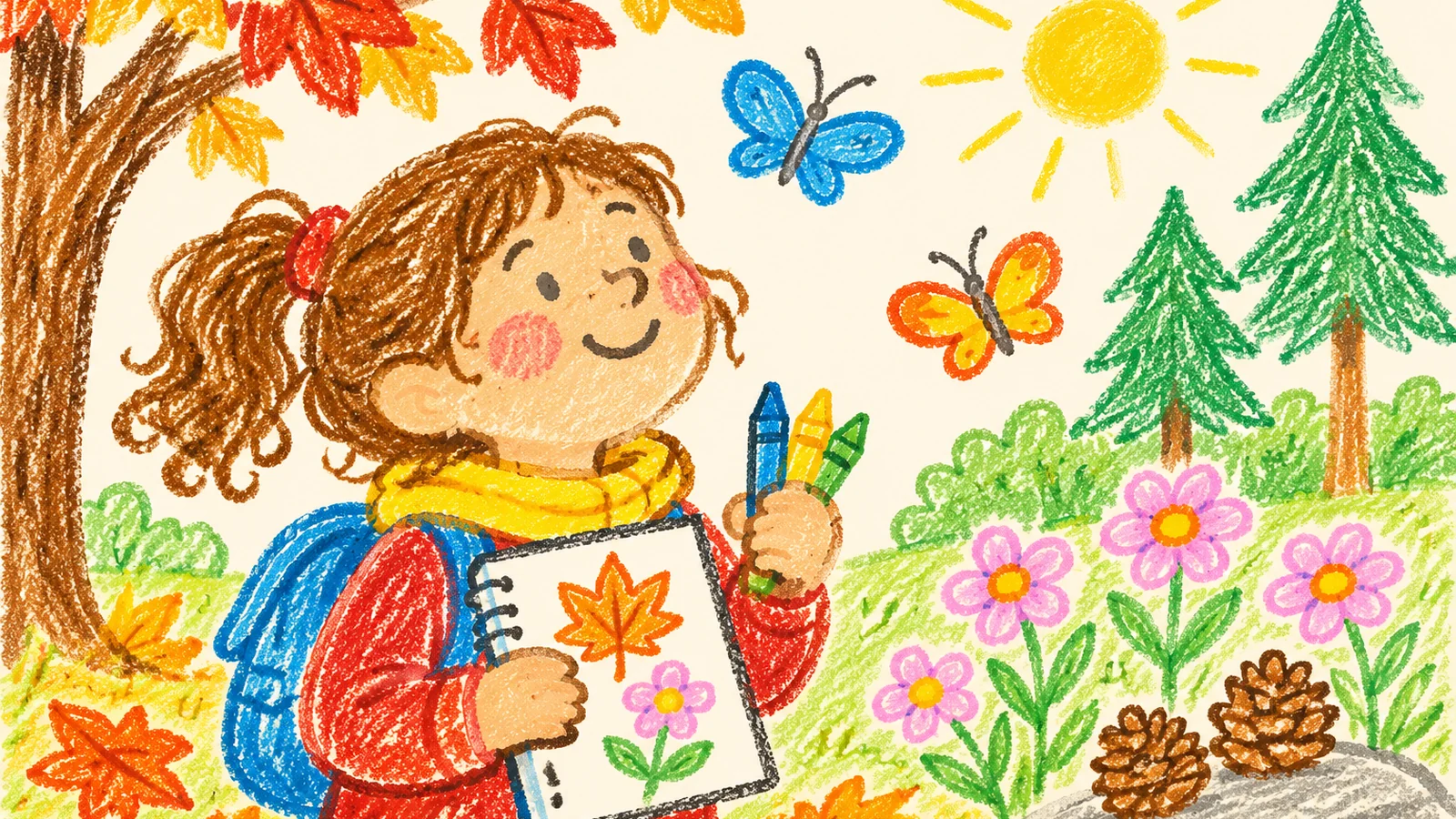
A nature scavenger hunt gives your kids a reason to slow down, look closely and notice what's growing or moving around them. You can use a different list for each season, with fall leaves, winter animal tracks, spring buds and summer bugs providing fresh things to find throughout the year.
These nature scavenger hunt ideas are designed for children ages 3 to 10, whether you're heading to a local park, exploring your backyard or taking a short walk around the neighborhood. Younger children can search for colors and textures, while older kids can follow more detailed clues and record what they discover.
Nature scavenger hunt lists for each season
The best seasonal hunts use things your children can actually see outside. You don't need a special trail or a long walk. A garden, a few trees near your home or a path through the park can provide plenty of things to look for. Change the list as the weather changes, and your children will have a different reason to explore each time.
For fall, look for leaves in different colors, acorns, pinecones, a bare branch, a feather and a leaf with an unusual shape. Winter searches can include animal tracks in mud or snow, evergreen needles, frost on a surface, a bird in a tree and an empty nest seen from a distance. In spring, search for flower buds, new green leaves, worms, puddles and signs of insects. Summer brings butterflies, ants, bees visiting flowers, seed pods, shady spots and interesting stones.
- Fall: Find a red leaf, a yellow leaf, an acorn, a pinecone and a bare branch.
- Winter: Spot animal tracks, evergreen needles, frost, a bird and an empty nest.
- Spring: Find a new bud, a worm, a flower, a puddle and a fresh green leaf.
- Summer: Look for a butterfly, an ant, a bee, a seed pod and a shady tree.
Backyard and park scavenger hunts
For a longer nature walk scavenger hunt, give older children clues rather than naming every object. Ask them to find something that has been eaten by an insect, something that grows in the shade or evidence that an animal has passed through. They can draw what they find or explain their discoveries when you get home.
Want a ready-to-use activity? The [Outdoor scavenger hunt printable](https://123arc.com/outdoor-scavenger-hunt/) gives you a starting point for an outdoor search. Take it along to the park or keep a printed copy near the door for an afternoon when everyone needs a little fresh air.
Easy nature scavenger hunts for preschoolers
For children ages 5 and 6, add simple descriptions to the search. Ask for something smooth, something rough, something that bends in the wind or something with a pattern. Children ages 7 to 10 can handle more specific clues, such as finding two different leaf shapes or spotting three kinds of natural textures.
If your child has trouble with a written list, read each clue aloud and let them mark it with a crayon or pencil. The aim is to notice things outside, not to finish every item before you go home.
- Find something green.
- Find something brown.
- Spot something yellow.
- Look for something white.
- Find something that has two colors.
- Spot something smaller than your hand.
Try a nature hunt using the five senses
Some children are sensitive to particular textures or smells. Let them skip a clue or describe something without touching it. Honestly, a child who prefers watching a spider from several feet away is still taking part in the hunt.
You can also ask an older child to compare two discoveries. Does one leaf feel rougher than another? Is the bird call loud or quiet? These small questions encourage careful observation without turning a family walk into a formal lesson.
- Find something rough.
- Find something smooth.
- Listen for a bird.
- Notice something that smells pleasant.
- Look for something that moves in the breeze.
- Find something soft to describe.
- Notice a sound coming from far away.
Leave nature as you found it
Give your child a way to keep a record instead. They can take a picture of an interesting leaf, draw a flower in a small notebook or make a quick sketch of the tracks they spotted. If you take photographs, encourage them to include a little of the surrounding area so they can remember where they made the discovery.
Before leaving, check that everyone has put away their paper and pencils and that no wrappers or other rubbish have been left behind. You can also finish with a quick look around the area you explored. Leave the plants, stones and wildlife as they were when you arrived.
Turn your discoveries into a nature journal
You can keep these pages in a folder and revisit them as the seasons change. Compare a fall tree drawing with a spring drawing of the same tree. Ask your child what looks different and what stayed the same. These comparisons give them a reason to pay attention on the next walk.
Keep the materials simple: plain paper, crayons, colored pencils and a clipboard if you want to draw outside. A printable activity can also help when you need a little structure. Start with the Outdoor scavenger hunt printable, then let your child add their own discoveries to a journal page.
Questions parents ask
What should I put on a nature scavenger hunt for kids?
Include familiar outdoor finds such as leaves, flowers, birds, stones, insects and interesting textures. Adjust the clues to your location and the season so your children have a fair chance of spotting most of the items.
How do you do a nature scavenger hunt with preschoolers?
Start with five or six easy clues, such as finding something green, something brown and a bird. Read the clues aloud and let your child point to discoveries rather than collecting them.
Can you do a nature scavenger hunt in your backyard?
Yes. A backyard can provide leaves, insects, birds, shadows, flowers and different textures. You can also repeat the same hunt in different seasons to see what changes.
More from the blog
All articles Valentine's Day activities for kids at home and schoolPlan Valentine's Day fun with heart crafts, scavenger hunts, printable games and a 45-minute classroom party for children ages 3 to 10.
 100th day of school ideas: 25 fun ways to celebrateMake the 100th day of school special with 25 easy activities for kindergarten through second grade, including crafts, games, snacks and a sample day plan.
 Fry sight words list: First 100 words and how to teach themExplore the first 100 Fry sight words in groups of 25, learn how the full 1,000-word list works, and find an easy weekly practice routine.