Coloring7 min read
Quiet time activities for kids who have stopped napping
Try a simple 45-minute quiet time routine for kids ages 3 to 5 who no longer nap, with printable activities, a visible timer and easy rules.
 By the 123arc teamPublished Oct 28, 2026

Contents
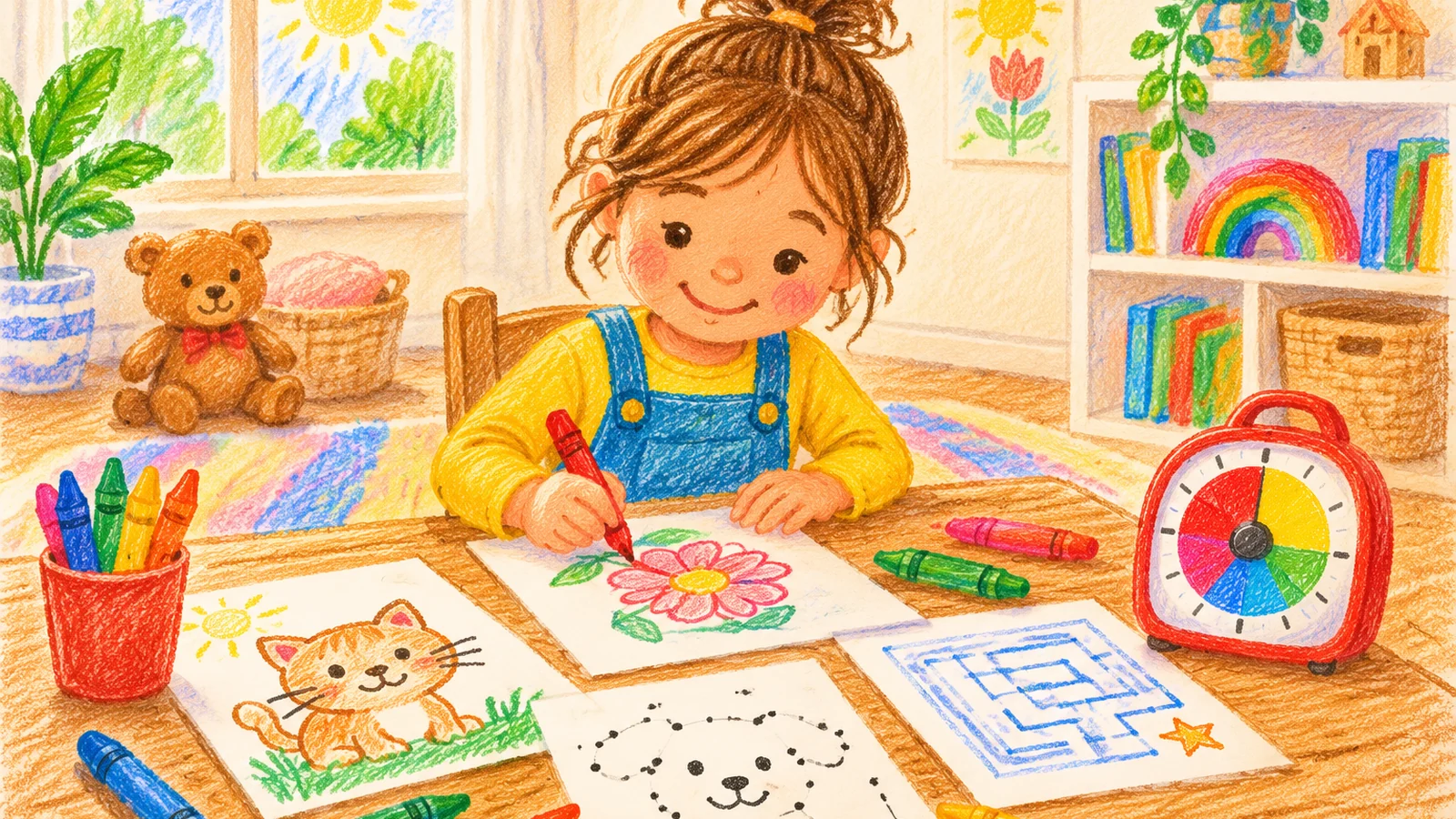
Quiet time activities give children ages 3 to 5 a chance to rest without having to fall asleep. Set aside 45 minutes with a small basket of two coloring pages, a 10-dot dot to dot, a simple maze and a timer your child can see.
If your preschooler has stopped napping but still gets cranky by late afternoon, you probably need a break too. This routine is for parents, grandparents and caregivers who want a calmer stretch of the day without turning rest time into another battle.
Why quiet time still matters after naps end
Some children stop napping at 3, while others still need a daytime sleep well into the preschool years. Once your child starts skipping naps, you might notice a familiar pattern: plenty of energy after lunch, followed by tears over a missing toy or an ordinary request around 4 p.m. A child can be done with naps and still need a break from noise, movement and constant decisions.
Quiet time gives you a middle ground. Your child does not have to sleep, and you do not have to provide entertainment every minute. The goal is a short stretch of calm activity, not a perfectly silent room or a child who sits still without moving.
Keep your expectations realistic. A newly 3-year-old may manage 10 minutes alone before asking for help, while a child nearing 5 may happily finish a puzzle and look through books. Start with what your child can do today, then build up gradually.
Build a 45-minute quiet time basket
Use a small basket or shallow box that your child can carry. Put in two coloring pages, one dot to dot with about 10 dots, one small maze, a few crayons and a picture book if your child enjoys looking through one. Keep the choices limited so your child can get started without asking you to find supplies.
Choose pages that fit your child's current skills. A 3-year-old will probably enjoy large pictures with thick outlines, while a 5-year-old might want a maze with a few turns or a dot to dot that forms a familiar animal. You can print easy coloring pages for toddlers and preschoolers for younger children or choose a simple picture from dot to dot printables for a child who is ready to count.
You do not need to fill the basket with brand-new activities every day. Two coloring pages are enough, and the dot to dot can be very short. A basket with too many options can turn into a sorting session instead of a quiet break.
Put the basket in the same place each day. A familiar setup helps your child learn what happens after lunch, and you will spend less time searching for paper while trying to get your own break.
- Two coloring pages with familiar pictures
- One dot to dot with about 10 dots
- One small maze suited to your child's age
- A few crayons or washable markers
- A visible timer and an optional picture book
Use a timer your child can see
A visual timer helps make quiet time feel predictable. Choose one with a colored section that shrinks as time passes, or use a simple kitchen timer if your child understands how it works. Show your child where the timer will end before you begin.
For the first few days, do not expect your child to manage all 45 minutes independently. Start with 10 or 15 minutes of quiet play, then add a few minutes as your child gets used to the routine. You can still work toward a 45-minute block, but the full period may include a little help at the beginning or a quiet book at the end.
Explain the timer in plain language: "When the red part is gone, quiet time is finished." Avoid resetting it because your child asks how much longer it will be. If you change the time every few minutes, the timer stops being a reliable guide.
Some children become anxious about a ticking sound or a countdown. If that happens, use a silent visual timer or a clock with a clear end point. The tool should help your child feel settled, not add another source of stress.
Set three rules and keep them steady
Preschoolers do better with a few clear rules than with a long speech. Tell your child what they can do, where they can do it and what happens if they need you. Practice the routine together before expecting them to follow it alone.
You might say, "You can color, do your dot to dot or try the maze. Stay in your quiet spot, and call me if you need help. When the timer ends, we will be together again." That is enough for most children to understand the plan.
Quiet does not have to mean no sound at all. Your child can hum softly, turn pages or ask for help when a crayon breaks. Save the stricter rules for safety, such as staying away from stairs, kitchens or small objects that are unsafe for younger siblings.
What if your child leaves the spot every two minutes? Walk them back calmly and repeat the same short reminder. Try not to turn each return into a debate. If the routine keeps falling apart, shorten the time or sit nearby for the first few minutes.
Rotate the pages before your child gets bored
Keep a few spare printables in a folder and change the basket every couple of days. You do not need to buy new toys or create a fresh activity each afternoon. Swapping a familiar picture for a new one can be enough to renew interest.
Pay attention to what your child actually chooses. If both coloring pages get finished but the maze stays untouched, replace the maze with a picture book or another drawing page. If your child loves finding a path through a maze, keep a few at different difficulty levels and bring out the harder ones later.
For a fresh theme, try animal coloring pages one week and rainbow coloring pages the next. Let your child choose between two options before quiet time begins. That small decision gives them some control without handing over the whole plan.
Keep finished pages in a folder if your child likes looking back at their work. You can also recycle pages that no longer interest them. The point is to keep the basket useful, not to build a collection of every sheet your child has colored.
Adjust quiet time to your child's age and mood
For a 3-year-old, 45 minutes may be too long to spend alone with paper activities. Start with a shorter period, stay nearby and offer help getting the first page started. A familiar stuffed animal or board book may help your child settle, provided it is safe for them to use independently.
A 4-year-old may be ready to move between the coloring pages, dot to dot and maze with fewer reminders. A 5-year-old might enjoy completing the activities in any order and choosing a book when the paper tasks are done. You can keep the same basket structure while changing the difficulty.
If your child is ill, unusually upset or clearly exhausted, be flexible. Offer a cuddle, a story or an earlier bedtime rather than insisting on a full quiet-time block. A routine should support your family, not become a test your child has to pass.
You may need to use quiet time yourself at first. Sit nearby with a book or fold laundry in the same room, then gradually move to another spot for a few minutes. Independent play is a skill children learn with practice, and your calm, predictable response helps them get there.
Questions parents ask
How long should quiet time be for a 3-year-old?
Start with 10 to 15 minutes if your child is new to quiet time. Add time gradually as they get comfortable, and work toward 45 minutes only if it suits their needs and attention span.
What can my child do during no nap quiet time?
Offer coloring pages, a short dot to dot, a simple maze or a picture book. Keep the choices familiar and easy to reach so your child can begin without needing you to organize each activity.
Should I make my preschooler stay quiet for 45 minutes?
Set a calm expectation, but do not demand perfect silence or stillness. If your child cannot manage the full period, shorten it and build up slowly rather than turning quiet time into a daily struggle.
More from the blog
All articles Birthday party activities for kids: a printable plan for 10Plan a fun two-hour birthday party for 10 kids with printable name cards, a scavenger hunt, bingo, would-you-rather questions and a maze race.
 Story paper: 30 picture writing prompts for young writersHelp your child turn drawings into stories with printable story paper, 30 picture prompts, and a simple month-long plan for building writing skills.
 Graph paper activities for kids: 12 printable grid ideasTry 12 graph paper activities for kids, including pixel art, math games, symmetry drawings and coordinate pictures, with tips for choosing grid sizes.