Puzzles7 min read
Emergency sub plans: a one-hour printable block for any grade
Use these emergency sub plans to fill 60 minutes with printable activities, a class trivia game, simple grade adjustments, and clear folder notes.
 By the 123arc teamPublished Oct 24, 2026
Contents
Emergency sub plans can cover a full hour with five familiar activities: a themed word search, a maze, a color by number, a class trivia game, and a coloring page. You can leave the materials in one folder with a simple schedule, so a substitute can start the day without needing a lesson briefing.
This plan is for elementary teachers who need a dependable backup for an unexpected absence, a last-minute appointment, or a day when the usual lesson cannot run. It works best with activities students can understand quickly and directions that do not depend on knowing your class routines.
Build the hour around five printable activities
A substitute who has never met your students should not have to invent a lesson while taking attendance. Give them a printed schedule, a small stack of worksheets, and a clear stopping point for each activity. The variety helps students stay occupied without requiring special materials or a complicated setup.
Use the same order each time you refresh your emergency sub plans. Students can move from a quiet puzzle to a more visual task, then join a whole-class game before finishing with something creative. If one activity takes longer than expected, the substitute can shorten the next block rather than scramble for something else.
Here is the basic 60-minute schedule. The times include passing out papers and explaining directions, not just working time.
- 0 to 10 minutes: themed word search
- 10 to 20 minutes: printable maze
- 20 to 35 minutes: color by number
- 35 to 50 minutes: class trivia game
- 50 to 60 minutes: coloring page and quiet finish
Start with a word search students can tackle alone
Give students a themed word search for the first ten minutes. Choose a topic that suits the class, such as animals, seasons, food, or space. A familiar theme lets children begin without a long explanation, and the substitute can help anyone who has trouble finding the first word.
For younger students, use a short list of words and a large, easy-to-read grid. Older elementary students can handle diagonal words or a denser puzzle. If your class includes several reading levels, leave two versions in the folder and let the substitute hand them out as needed.
You can prepare a Word search printable ahead of time. Include the answer key if one is available, but tell the substitute that students should try independently before asking for help. A student who finishes early can circle the words again or write a sentence using one of them.
- A simple word search for kindergarten and first grade readers
- A themed puzzle with a manageable word list for grades 2 and 3
- A larger grid or more challenging vocabulary for grades 4 and 5
Use a maze for a short change of pace
The next ten minutes are for a maze. Students trace a route from start to finish, practicing visual tracking and careful pencil control while working quietly. The substitute only needs to explain where the path begins and where it should end.
Choose a maze that students can solve without frustration. A preschool-style maze may feel too easy for a fifth grader, while a complicated grid can stall a young reader who is still learning to follow paths. Leave a simpler backup for anyone who gets stuck, and allow students to erase and try again rather than rush them.
For the youngest classes, print from Easy mazes for preschoolers. For older students, use a more challenging maze or one built around shapes. Keep the activity low pressure. The point is to settle into the morning, not turn a worksheet into a race.
Give students fifteen minutes for color by number
Color by number gives the class a longer independent block. Students read the color key, match each number to a color, and fill the corresponding spaces. It is a good middle-of-the-hour activity because children can work at different speeds while following the same basic directions.
Before printing, check that the number key is readable and that students have the crayons or colored pencils they need. A page with too many tiny spaces can be tiring for younger children. Choose a simple picture for kindergarten and first grade, then save more detailed designs for students who can manage smaller sections.
A color by number printable can sit in the folder all year. If you want to make the activity seasonal, change the picture when you update the folder, but keep the directions the same. The substitute should not need to explain a new system every time.
What if a student finishes early? Ask them to check the color key, look for any missed spaces, and then write their name on the page. If the class has a routine for quiet independent work, the substitute can use it for the remaining minutes.
Run trivia as a whole-class game
Save fifteen minutes for trivia. This is the most social part of the hour, so the substitute can bring students together after the quieter worksheets. Read one question at a time and give everyone a few seconds to think before asking for answers.
For kindergarten and first grade, use short questions about animals, colors, everyday objects, or familiar stories. Older students may enjoy general knowledge questions that ask them to recall facts or explain a choice. If you have mixed ages, use easier opening questions and let later ones stretch the older students.
Set the rules in writing. Students can raise their hands, answer in teams, or write a response on scrap paper before anyone shares. Avoid making speed the main test. A child who needs extra thinking time should still get a chance to participate.
Prepare enough questions to fill the block, plus a few extras in case the class moves quickly. If the group is noisy, switch to silent written answers for a round. You can use [trivia questions for kids with answers](https://123arc.com/trivia-questions-for-kids/) to build a ready-to-read set and leave the answers on a separate sheet for the substitute.
Finish with coloring and prepare the folder
The last ten minutes are for a coloring page. It gives students a quiet task while the substitute checks that papers are complete and gets the room ready for dismissal or the next class. Leave a few extra pages for students who finish early or need a different level of difficulty.
Use Easy coloring pages for toddlers and preschoolers for simple pictures, or choose a more detailed subject for older students. If the class has a current unit or seasonal theme, a related picture can make the hour feel connected without requiring the substitute to teach new content.
Put the whole plan in a clearly labeled folder where a substitute can find it quickly. Include the schedule, student lists or seating information your school permits, copies of every activity, spare paper, and a short note about classroom routines. Add answer keys where useful and mark which pages students should complete independently.
Keep the instructions practical. Write down where supplies are stored, what students should do when they finish, how to handle bathroom requests under school policy, and who to contact for help. Leave a blank space for the substitute's notes about work completed or problems that came up.
- One printed copy of the 60-minute schedule
- A class set of each worksheet, plus a few spare copies
- Pencils, erasers, crayons, and scrap paper
- Answer keys and a brief note about student support needs
- School-approved contact details and essential classroom routines
- A short substitute feedback sheet
Questions parents ask
What should emergency sub plans include?
Include a timed schedule, ready-to-use activities, copies for every student, basic supplies, and classroom routine notes. Add answer keys and school-approved contact information so the substitute can work without searching for missing materials.
What are good substitute teacher activities for elementary students?
Word searches, mazes, color by number pages, trivia, and coloring are useful choices because the directions are easy to explain. Keep a simpler option available for students who need extra support and a more challenging page for early finishers.
How do I make printable sub plans work for different grades?
Keep the schedule and activity order the same, then adjust the reading level and difficulty of each page. Younger children need larger pictures and shorter word lists, while older students can work with harder puzzles and more demanding trivia.
More from the blog
All articles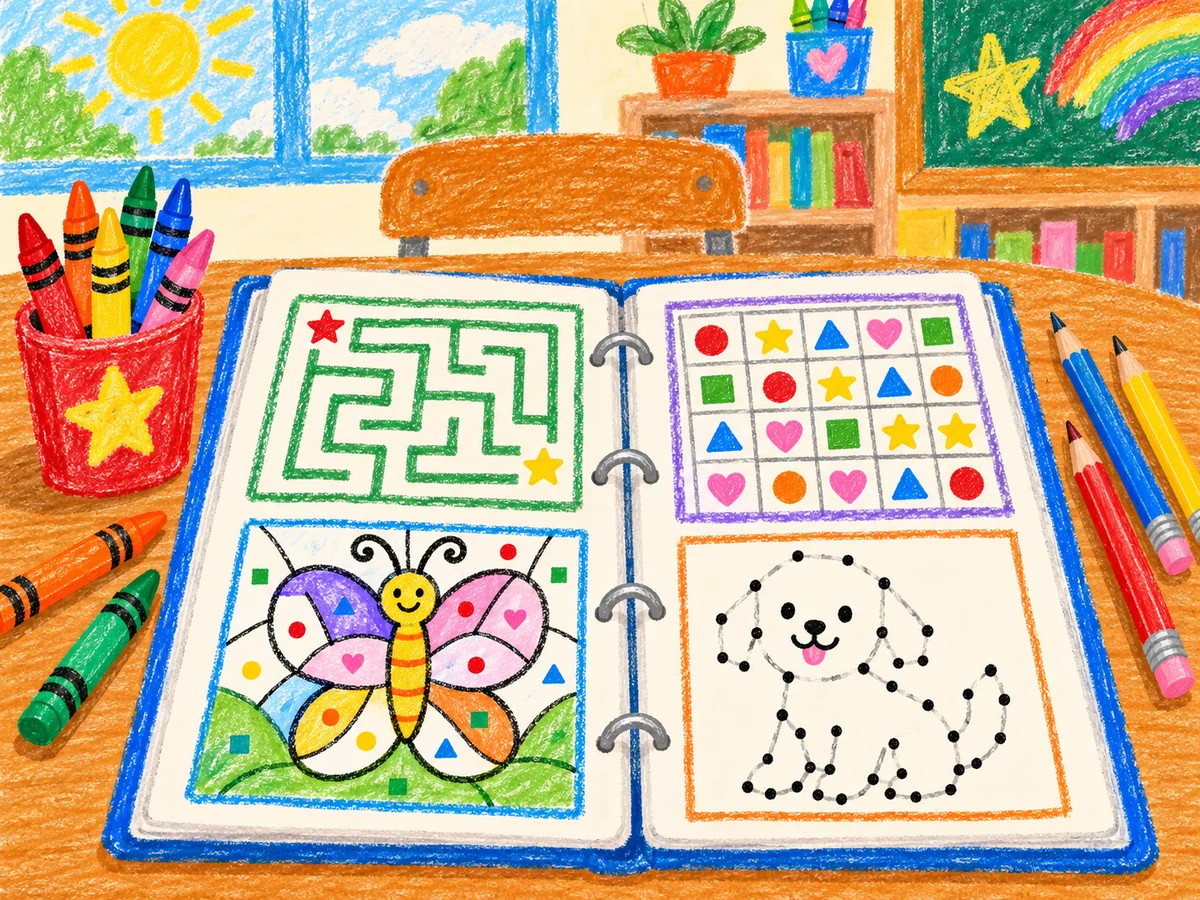 Early finisher activities that do not need gradingBuild a ready-to-use binder of early finisher activities with printable mazes, word searches, color by number and dot to dots kids can check themselves.
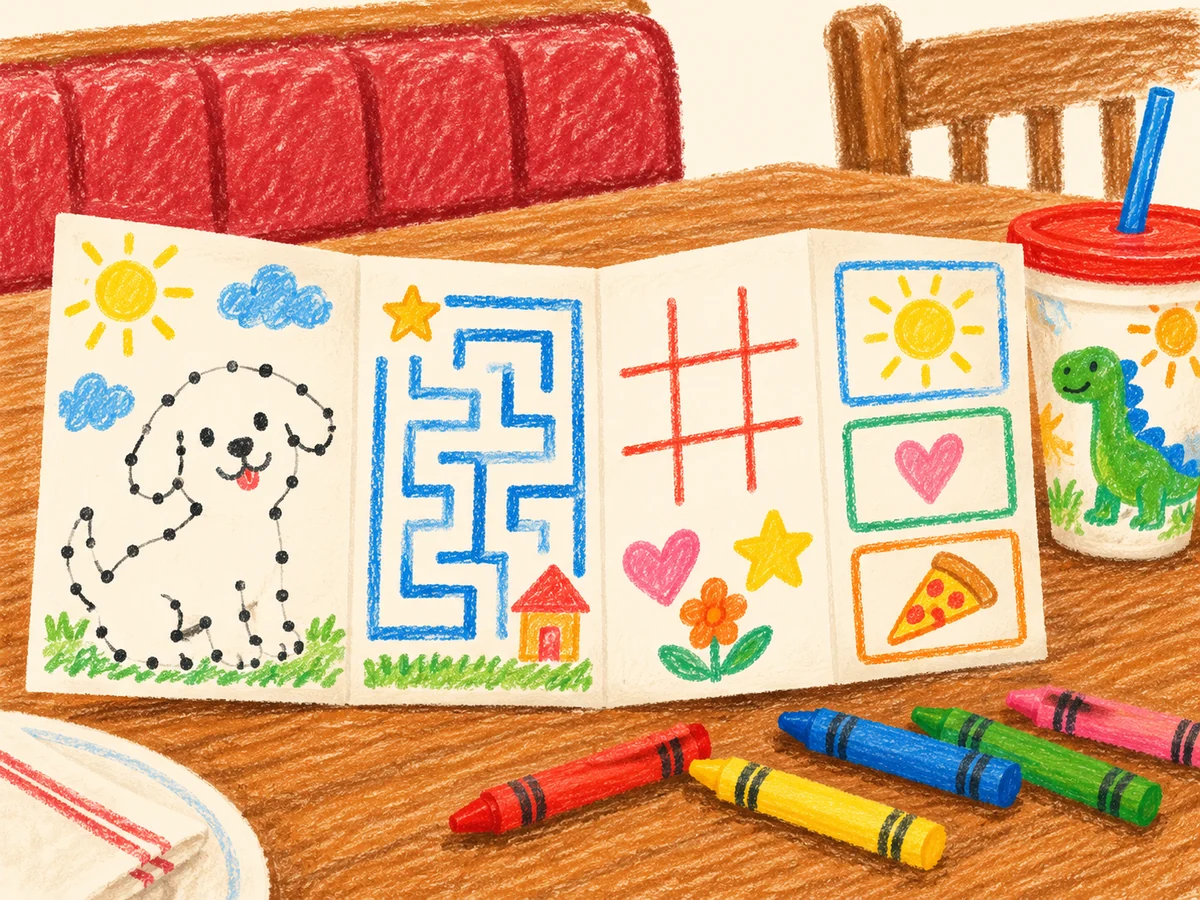 Restaurant activities for kids: what to print before you goKeep kids busy at a restaurant with four easy printables, simple packing tips, and age-friendly ideas for toddlers and older children.
 Road trip activities for kids that fit on a clipboardKeep kids busy on long drives with printable scavenger hunts, trivia, dot to dots and mazes, plus a simple plan for screen time and breaks.