Learning8 min read
Kindergarten centers: 12 ideas that run themselves
Set up 12 kindergarten centers with simple materials, picture directions and weekly changes. Includes a four-group rotation schedule.
 By the 123arc teamPublished Nov 26, 2026
Contents
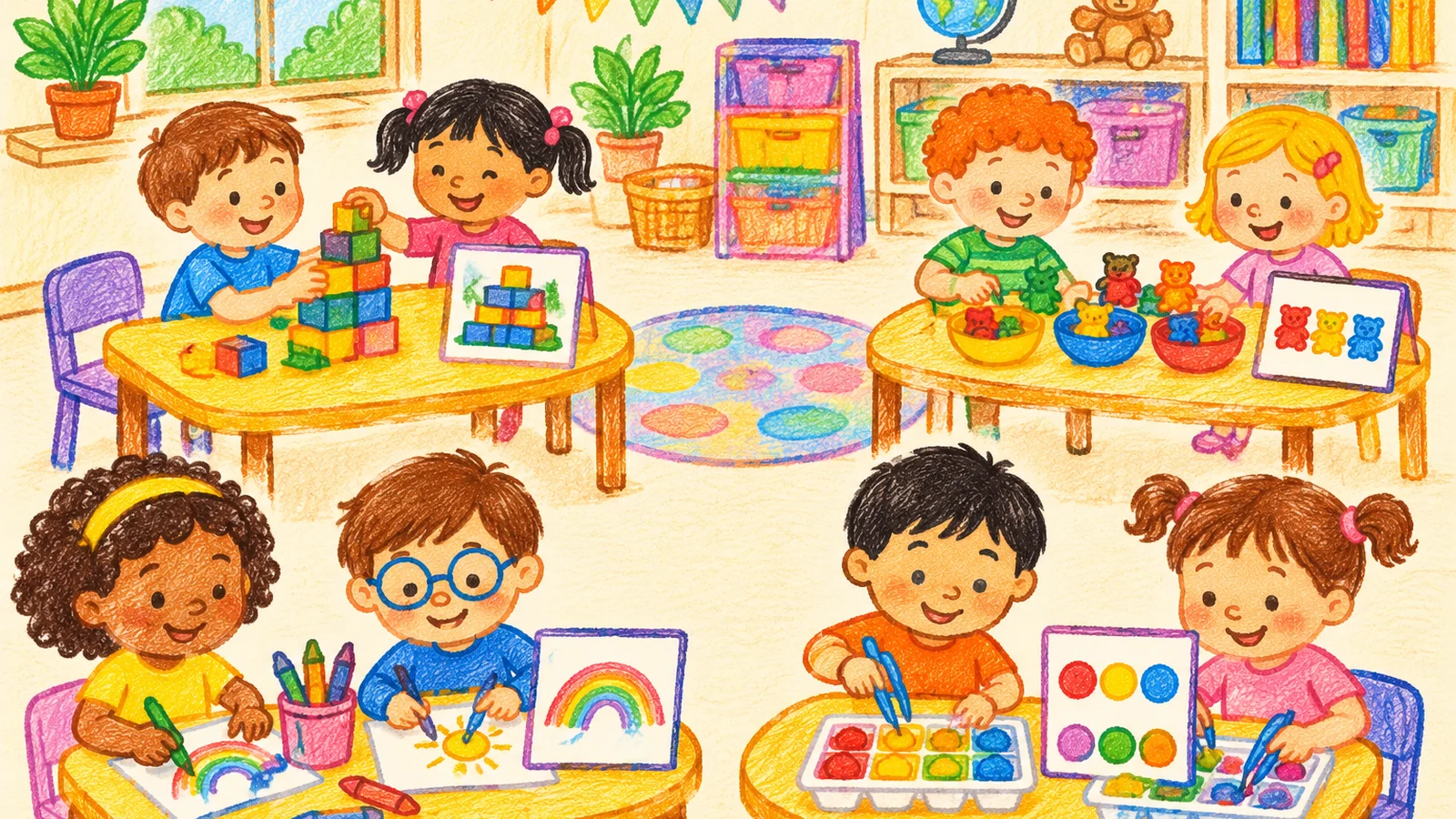
Kindergarten centers work best when children know exactly what to do, where to find their materials and how to clean up. Set up 12 activity stations with picture directions, familiar supplies and a simple rotation schedule so your students can work with less help.
These kindergarten center ideas suit children who are learning to work independently, share materials and move between activities. You can use them in a classroom, a homeschool group or a small learning space. Most stations need only a few minutes of preparation before the children arrive.
How to set up kindergarten centers for independent work
Start with four groups and four active centers. Give each group a color or picture symbol, such as a red apple, blue star, green frog or yellow sun. Put the same symbol on the group's rotation card and on its starting station. Children can check where they belong without asking you every time.
Each center needs a small supply basket, a finished-work tray and a picture direction card. Use three or four simple pictures to show the steps. For example, a coloring station card might show a page, crayons and a finished tray. Add a cleanup picture at the end so children know where everything goes.
Keep the first activities familiar. If children have never used a dot to dot page or a listening station, demonstrate it before the first rotation. Practice how to take one activity, complete it, put it away and move to the next station.
Aim for activities that children can start without waiting for an adult. Put extra materials within reach, keep directions short and avoid supplies that need frequent fixing. You can introduce more choices once the routine feels familiar.
Sight word and puzzle centers
A sight word center gives children a chance to recognize familiar words through short games. Put sight word bingo boards, calling cards and a small set of flashcards in one basket. Children pick a board, find each called word and cover it with counters. They can also turn over flashcards and read each word to a partner.
Use a picture card showing a bingo board, counters and a partner to explain the routine. For children working alone, add a small answer card or a matching picture on the back of each flashcard. Change the word set each week as the class learns new words. You can print sight word flashcards for a fresh set.
The puzzle center works well for children who enjoy solving a problem before moving on. Put simple mazes, dot to dot pages, pencils and crayons on the table. Children follow a path through a maze or connect the numbered dots to reveal a picture.
Show three pictures on the direction card: choose a page, solve it and place it in the finished tray. Swap the maze theme or dot pattern every week. Start with short paths and small dot sequences, then offer a harder page to children who finish early. Browse dot to dot printables when you need new pages.
Art and color by number centers
An art center gives children a quiet activity they can finish at their own pace. Set out a small selection of coloring pages, crayons, colored pencils and a tray for completed work. Keep the choices limited to two or three pages at a time so children spend their time coloring instead of deciding what to pick.
Use a picture card with a page, a box of crayons and a finished tray. Children choose one page, color it and return the crayons before moving on. Change the theme every week. Animals, flowers, dinosaurs and seasonal pictures all work well. Try coloring pages for kids for printable choices.
For a second art option, add a color by number activity. Children match each number to its assigned color and fill the spaces. Put a completed sample beside the blank page so they can check the color key themselves.
Change the picture and color key each week. Keep the first pages fairly open, with large spaces and only a few colors. A child who is still learning number recognition can use a page with a simple key rather than a crowded design.
Listening and building centers
A listening center gives children time to hear a story, follow along and talk about what they heard. Set out a classroom audio player or approved listening device, headphones, a small selection of recorded stories and a few picture response cards. Children choose a story, listen and pick a picture that shows a character, setting or event.
Show the routine with pictures of headphones, a story and a response card. Teach children how to adjust the volume before they use the station independently. Change the story each week, but keep the same response routine. You can ask children to draw their favorite part when they finish.
The building center needs blocks, linking cubes, construction pieces or simple building sets. Add picture challenge cards showing a bridge, tower, house or animal shape. Children choose a card, build the model and leave it on a marked display space until cleanup time.
Change the challenge cards each week. One week, ask children to build something taller than a toy figure. The next week, show a picture of a building with a roof or a bridge between two blocks. Keep a small basket for loose pieces so cleanup stays manageable.
Sensory, drawing and story centers
A sensory bin gives children a hands-on activity with a clear beginning and end. Fill a shallow tub with a suitable base such as large pom-poms, scoops, plastic animals or other age-appropriate materials. Add cups, tongs and a few picture challenge cards. Children can sort objects by color, move them between containers or find matching items.
Keep the rules visible. A picture card can show hands staying inside the bin, materials going back into the tub and the finished bin being left tidy. Use materials that are safe for your students' ages and abilities, and supervise closely when small objects could be a choking hazard. Change the objects and sorting challenge each week.
The drawing and story center gives children a place to make their own pictures and tell a story. Put out crayons, colored pencils, story paper and a few picture prompts. A card might show a child drawing a character, adding a place and telling what happens next.
Some children will draw a detailed scene, while others may make one picture and tell you the story aloud. Both are useful starting points. Change the weekly prompt to something concrete, such as a pet in the park, a trip to the moon or a rainy day. Keep story paper printables in the supply basket so children can start a new story whenever they visit.
Four-group rotation schedule and weekly changes
A four-group schedule works well when four centers are open at the same time and each group moves after a set period. Start with 10 to 15 minutes per rotation, depending on how quickly your students settle into the routine. Use a visual timer and a consistent cleanup signal.
You do not need to run all 12 centers during one session. Choose four for the day, then switch the selection during the next session. This gives children time to learn each routine without making the room feel crowded.
- Rotation 1: Red group at sight words, blue group at puzzles, green group at art, yellow group at building.
- Rotation 2: Red group at puzzles, blue group at art, green group at building, yellow group at sight words.
- Rotation 3: Red group at art, blue group at building, green group at sight words, yellow group at puzzles.
- Rotation 4: Red group at building, blue group at sight words, green group at puzzles, yellow group at art.
Keep the routine fresh without starting over
The easiest way to manage kindergarten centers is to keep the instructions stable and change only the activity materials. Children already know how to choose, work, tidy up and move. A new picture, word set or building challenge gives them something different to try without requiring another full lesson on the routine.
Prepare a small weekly replacement folder for each station. Put in new bingo words, maze pages, coloring sheets, story prompts or sensory challenge cards. Store the regular materials in labeled baskets so you can swap the activity without reorganizing the whole room.
Watch which activities children can complete independently and which ones still need your help. If several children get stuck at one station, simplify the picture directions or remove one step. If a center is finished too quickly, add a second challenge card rather than more complicated instructions.
Keep one quiet backup activity available for children who finish early. A spare coloring page or an extra maze is usually enough. Once the children understand the routine, you can spend more time working with a small group while the other students stay busy.
Questions parents ask
How long should kindergarten centers last?
Start with 10 to 15 minutes per center and adjust to your class. Shorter rotations may work better while children are learning the routine.
How many centers should kindergarten have?
Four active centers are a practical starting point for a four-group rotation. You can prepare 12 different activities and rotate which four are available each day.
How do you get kindergarten students to work independently at centers?
Use picture directions, labeled baskets and a clear finished-work tray. Practice the routine together before expecting children to complete it on their own.
More from the blog
All articles Get to know you questions for kids aged 5 to 10Use these 100 get to know you questions for kids aged 5 to 10, plus five easy icebreaker games for school, clubs, sports teams and parties.
 Preschool themes by month: 48 ideas for a full yearPlan a full year of preschool with 48 weekly themes from August to July, including read-aloud ideas, hands-on activities and printable fun.
 20 morning meeting games for kindergarten to 3rd gradeTry 20 quick morning meeting games for kindergarten through 3rd grade. Each takes 3 to 5 minutes and gets children talking, moving and connecting.