Games9 min read
20 morning meeting games for kindergarten to 3rd grade
Try 20 quick morning meeting games for kindergarten through 3rd grade. Each takes 3 to 5 minutes and gets children talking, moving and connecting.
 By the 123arc teamPublished Nov 23, 2026
Contents
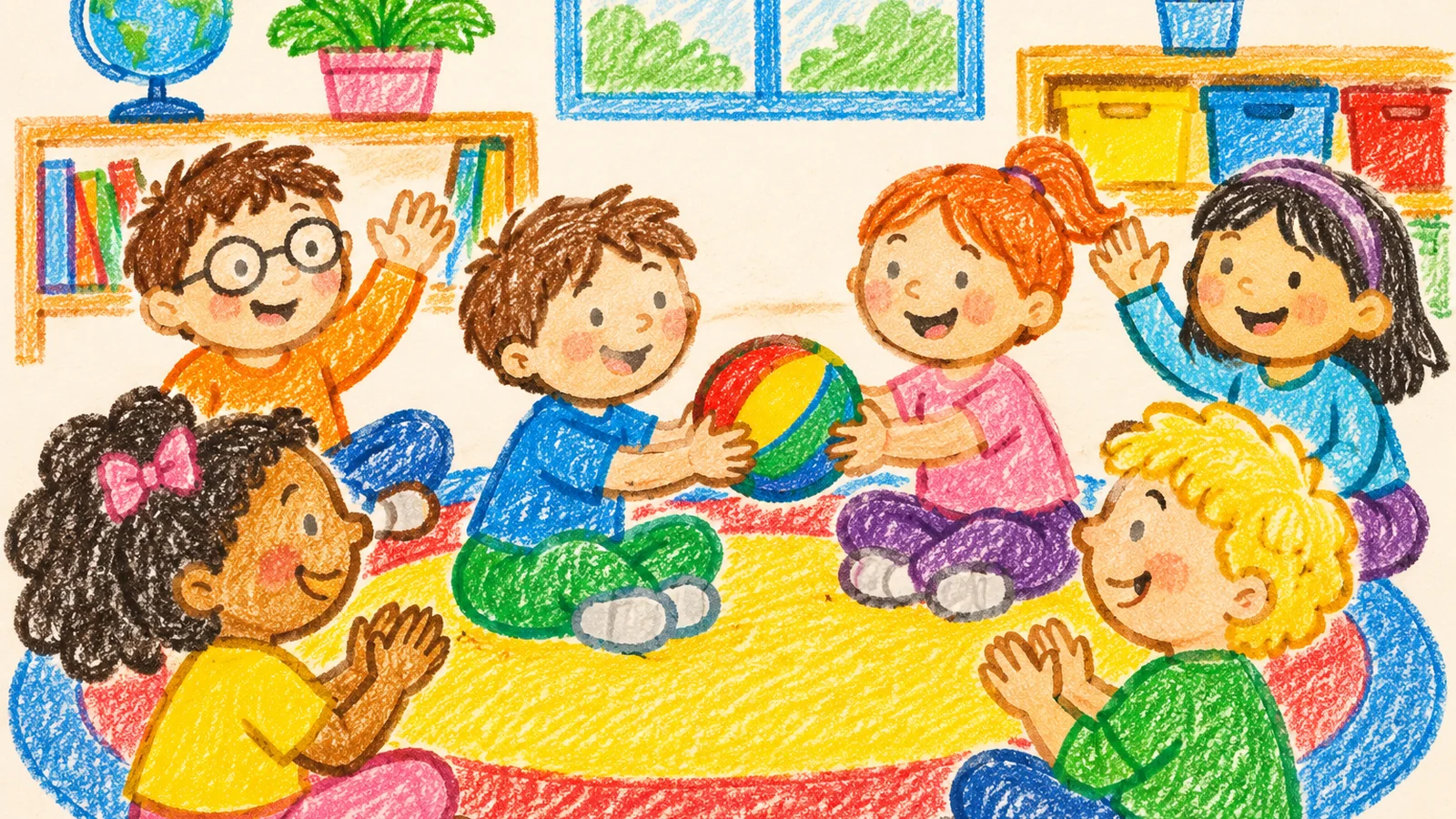
Morning meeting games give kindergarten through 3rd grade students a fun way to start the school day. These 20 morning meeting games and greetings take just 3 to 5 minutes each, with simple rules that help children join in without a long explanation.
You will find greeting games, quick sharing activities and movement games for different ages and energy levels. Use them in a classroom, homeschool group or morning circle, and pick the ones that suit your students that day. Most need no supplies, and the few that use an object work with things you probably already have.
Morning meeting greeting games
Start with a greeting game that lets every child feel included. These four ideas work well at the beginning of the week, when a new student joins, or when your class needs a friendly reminder to learn everyone's name. Keep the circle small enough for children to hear one another.
For kindergarten, demonstrate the greeting first rather than explaining several steps at once. Older children can take turns leading the game or add their own greeting ideas.
- Ball toss name greeting (3 to 5 minutes): Have children stand or sit in a circle. Toss a soft ball to someone while saying, "Good morning, Maya!" Maya replies, "Good morning!" before tossing the ball to another classmate. Each child gets a greeting. This builds name recognition, listening and friendly classroom connections.
- Silent greeting (3 minutes): Invite children to greet the person beside them without speaking. They can wave, give a thumbs-up, smile or make a friendly hand gesture. Let partners respond in the same way. This builds awareness of others and helps shy children take part without speaking in front of everyone.
- Greeting with a gesture (3 to 5 minutes): Choose a simple action such as a wave, elbow wiggle or two-handed clap. Each child turns to a neighbor, says good morning and performs the action. The neighbor copies it and returns the greeting. This builds social confidence and encourages children to notice and respond to others.
- Name and motion circle (4 to 5 minutes): The first child says their name and makes a small movement, such as touching their shoulders. The class repeats both. Continue around the circle, adding each new name and motion. This builds memory, attention and name recognition.
Morning meeting sharing games
Sharing games give every student a short turn to speak and listen. Set a simple rule before starting: each answer should take about 10 to 20 seconds. That leaves enough time for several children to participate without letting the meeting run long.
Some children need a little thinking time before answering. Give them a choice to pass once and come back later, rather than putting them on the spot.
- One-word check-in (3 minutes): Ask each child to describe their morning using one word. Answers might include happy, sleepy, excited or calm. Children can explain their choice if time allows. This builds vocabulary and helps students practice naming feelings.
- Favorite thing round (4 to 5 minutes): Choose one topic, such as a favorite animal, snack or game. Go around the circle and let each child name one favorite. Ask students to listen for answers they share with classmates. This builds speaking confidence and helps children discover common interests.
- Finish the sentence (4 minutes): Give the class an unfinished sentence such as "Today I hope to..." or "Something that makes me smile is..." Each child completes it in their own words. Keep the prompts easy enough for kindergarten students to answer. This builds language skills and gives children practice expressing ideas.
- Guess whose answer (5 minutes): Ask everyone to share one favorite activity with a partner. Collect a few answers without names and read them aloud. The class guesses which classmate gave each answer. Skip personal or sensitive information. This builds listening skills and helps students learn about one another.
Movement games for an energetic morning
Movement games are a good choice when students arrive full of energy or need a break from sitting. Choose actions that fit your classroom space, and remind children to keep their hands to themselves. You can run these activities beside desks or in an open circle.
For younger students, demonstrate each movement before the game begins. Third graders can follow more complicated instructions or take turns calling out the actions.
- Would you rather move (4 to 5 minutes): Give two choices, such as "Would you rather be a cat or a dog?" Assign one side of the room to cats and the other to dogs. Children walk to their chosen side and share a reason with someone nearby. This builds decision-making, speaking and listening. Find more ideas in our Would you rather questions for kids collection.
- Copy the leader (3 minutes): Choose one student to lead simple movements, such as stretching arms, marching in place or tapping knees. Everyone copies the leader for about 20 seconds before another child takes over. This builds coordination, attention and leadership skills.
- Freeze and smile (3 to 4 minutes): Children move gently in place while you count slowly to five. When you say "Freeze," everyone stops in a silly but safe position. Hold for a moment, then start again. This builds self-control and listening skills.
- Action alphabet (4 to 5 minutes): Pick a letter and ask children to think of an action that starts with it. For B, they might bounce like a ball. For S, they might stretch like a star. Let a few students demonstrate their ideas. This builds letter awareness, vocabulary and physical coordination.
Quick thinking and observation games
Thinking games help students settle into the school day without requiring worksheets or lengthy instructions. They work particularly well after a greeting activity, when children are ready to focus and take turns.
Keep the questions short and accept different answers when they make sense. Kindergarten students can answer with a single word, while older children can explain how they reached their answer.
- Classroom I spy (3 to 5 minutes): Say, "I spy something blue," and let children look around the room for an object that matches. Give another clue if the class struggles. Older students can take turns being the person who chooses an object. This builds observation, vocabulary and descriptive language.
- Quick trivia round (4 to 5 minutes): Ask three to five age-appropriate questions about animals, nature, numbers or everyday objects. For example, ask how many legs a spider has or what color you get by mixing red and yellow. Let children answer individually or as a group. This builds recall and curiosity. You can find more ideas in our Trivia questions for kids with answers collection.
- What's missing? (3 to 4 minutes): Place three familiar classroom objects on a desk. Give children a few seconds to look, then ask them to close their eyes while you remove one object. They open their eyes and guess what's missing. Start with three objects for kindergarten and use five for older students. This builds visual memory and concentration.
- Sound detective (3 to 5 minutes): Make a familiar sound behind a book or out of sight, such as tapping a pencil, clapping or shaking a container of crayons. Ask children to identify what they heard. Give everyone a turn to suggest an answer. This builds listening attention and sound recognition.
Teamwork and group challenge games
Group challenges give children a chance to cooperate rather than compete for the first correct answer. They are especially useful when you want students to practice taking turns, following instructions and helping classmates.
Set a clear stopping point before each game starts. A three-minute challenge should finish while children are still interested, rather than stretching until they lose focus.
- Group counting challenge (3 minutes): Ask the class to count aloud together from one to 20. For an extra challenge, let children count by twos or fives. If two students speak at once during a silent counting variation, start again. This builds number recognition, turn-taking and group attention.
- Category chain (4 to 5 minutes): Choose a category such as animals, foods or things found outside. One child names an example, and the next child gives a different answer. Continue around the circle without repeating answers. For kindergarten, offer a smaller category and allow extra thinking time. This builds vocabulary and recall.
- Three-clue guessing game (4 minutes): Think of a familiar object or animal and give three clues, one at a time. For example, "I am yellow," "I grow on a tree," and "Monkeys are often pictured eating me." Children guess the answer after each clue. This builds reasoning and listening skills.
- Classmate connection challenge (5 minutes): Give children one simple task, such as finding someone who likes the same fruit or enjoys the same outdoor activity. Students walk around, ask classmates and report one shared interest. Set a rule that everyone must speak to at least one new person. This builds communication and classroom friendships.
How to choose the right morning meeting game
Choose your game based on the energy and age of your students. Kindergarten children usually do best with one clear instruction and a visible demonstration. First graders can handle short sharing rounds, while second and third graders can take on guessing games, category challenges and student-led greetings.
You do not need a different game every morning. Repeating a familiar activity helps children learn the rules and take part with less prompting. Change the greeting or question occasionally to keep it interesting.
A useful weekly routine is to start Monday with a name greeting, Tuesday with a sharing game, Wednesday with movement, Thursday with a thinking challenge and Friday with a teamwork activity. Keep a short list of favorites near your meeting area so you can choose quickly.
Watch how the group responds. If children are restless, choose a movement game. If they arrive quietly, try a sharing round or a gentle greeting. Give students a chance to lead once they know the rules, and keep the activity short enough that everyone is ready for the next part of the school day.
Questions parents ask
What are the best morning meeting games for kindergarten?
Ball toss name greeting, silent greeting, copy the leader and classroom I spy are good choices. They have simple rules and give young children plenty of chances to participate.
How long should a morning meeting game last?
Aim for 3 to 5 minutes for a quick game or greeting. Short activities leave room for everyone to take a turn without delaying the rest of your morning routine.
What morning meeting games can you play without supplies?
Try silent greeting, finish the sentence, would you rather move, action alphabet or category chain. These games need only a little classroom space and clear instructions.
More from the blog
All articles A simple weekly plan for preschool activities at homePlan preschool activities at home with a simple five-day schedule for ages 3 to 5, including letters, numbers, crafts, printables and play.
 Activities for 5 year olds at home, with 30 ideasTry 30 activities for 5 year olds at home, including board games, reading practice, puzzles, creative projects, outdoor play and helpful jobs.
 Family game night ideas kids will ask to play every weekPlan a family game night kids look forward to every week. Get 20 easy game ideas, printable activities and tips for playing across ages 4 to 12.