Learning6 min read
Activities for 5 year olds at home, with 30 ideas
Try 30 activities for 5 year olds at home, including board games, reading practice, puzzles, creative projects, outdoor play and helpful jobs.
 By the 123arc teamPublished Nov 22, 2026
Contents
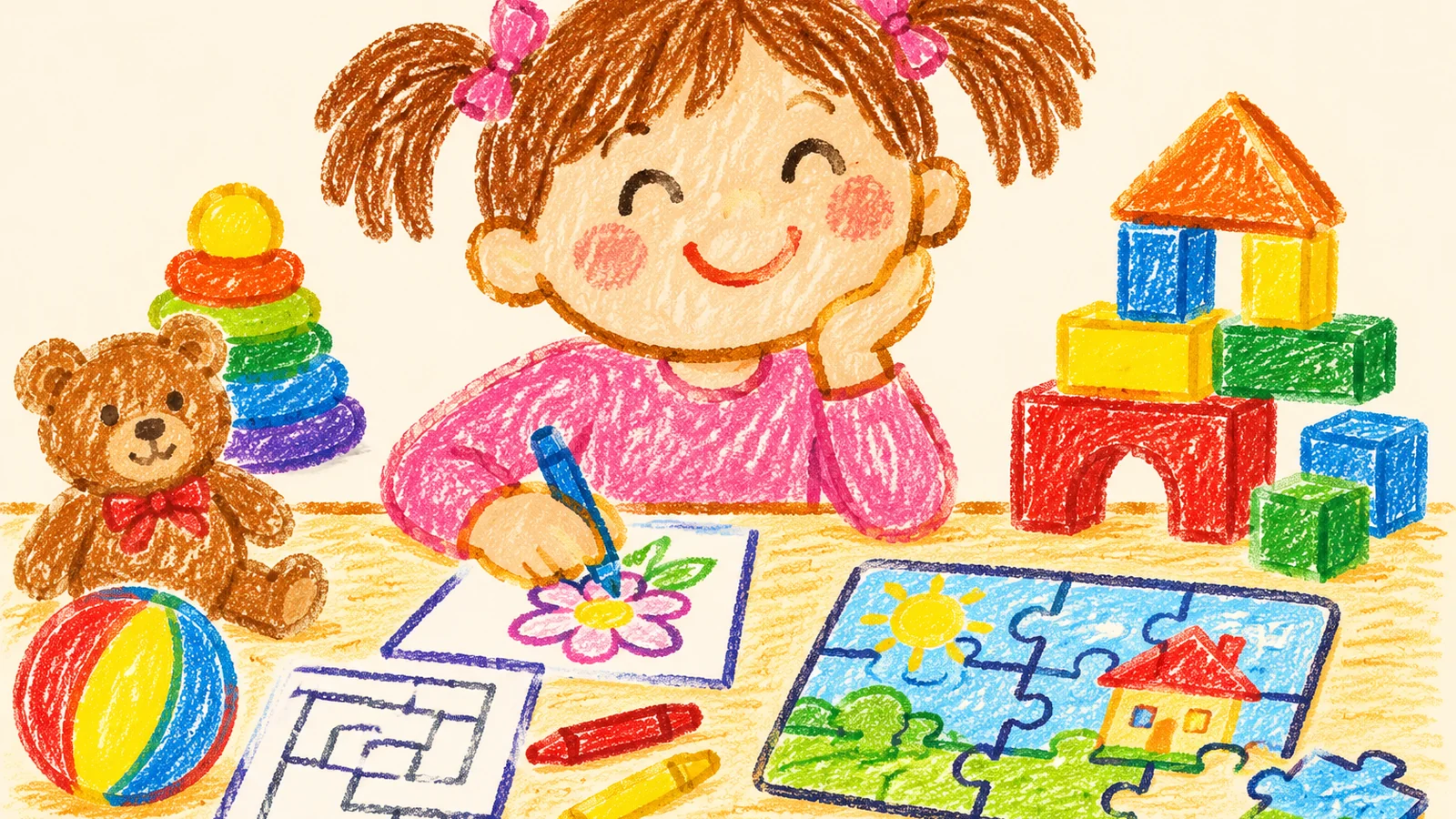
Activities for 5 year olds work best when they give your child something to figure out, make or finish independently. Try board games, simple puzzles, early reading challenges and hands-on projects that hold their attention for around 15 to 20 minutes.
If you have a kindergartener at home, you probably want activities that feel like play but give your child room to practice new skills. These 30 ideas suit five year olds who are ready for a few more rules, longer challenges and small responsibilities around the house. Most need ordinary household supplies, so you can get started without a special shopping trip.
Games with rules for five year olds
Five is a good age to introduce games where your child has to wait, follow instructions and remember what happens next. Start with short rounds. If your child loses interest after two turns, put the game away and try again another day.
Look for games with simple rules and a clear finish. You can let your child explain the rules back to you before playing. That little step gives you a chance to check understanding without turning game time into a lesson.
- Play a simple matching card game. Turn over two cards at a time and try to find matching pictures.
- Set up a color or number card game. Take turns matching cards by color or number.
- Play a board game with a small number of spaces. Roll a die, count and move your pieces.
- Try a homemade memory game. Put six small objects on a tray, cover them, then ask your child which one is missing after you remove an item.
- Play Simon Says. Take turns giving instructions such as touch your toes, clap twice or hop on one foot.
Puzzles and printable challenges
Your five year old is probably ready for puzzles with a little more thinking involved. Choose activities that require counting, spotting patterns or planning a route rather than simply following a familiar picture.
Mazes are particularly good for children who enjoy finding their own solutions. Start with an easy page and move to a harder one when your child can complete the route without much help. You can find [printable mazes for kids](https://123arc.com/printable-mazes/) with different levels of difficulty.
Dot to dots offer another good challenge. Your child follows numbered points in order, then sees what picture appears. Try [dot to dot printables](https://123arc.com/dot-to-dot-printables/) with longer sequences if counting is becoming comfortable.
- Complete a 24-piece jigsaw puzzle together.
- Work through a maze without lifting the pencil from the paper.
- Join numbered dots to reveal an animal or familiar object.
- Sort a collection of buttons or blocks by size, color or shape.
- Finish a simple pattern by deciding which shape or color comes next.
Early reading and kindergarten learning games
At five, your child may be beginning to recognize familiar words, connect letters with sounds and read a few simple sentences. Keep practice short and playful. Five or ten minutes of a game can be enough for one sitting.
Sight words are useful because children see them repeatedly in early books. Write three familiar words on separate pieces of paper, place them around the room and ask your child to find each one. Add another word when the first three become easy.
You can also use kindergarten sight words worksheets for a little paper practice. If your child enjoys coloring, try a [color by number printable](https://123arc.com/color-by-number-printable/) to combine number recognition with following directions.
- Play a sight word hunt. Find five written words hidden around one room.
- Make a letter sound matching game using picture cards.
- Build your child's name with magnetic letters or paper letter cards.
- Play word bingo with familiar kindergarten words.
- Read a short picture book together, then ask your child to retell what happened.
Building and art projects to make at home
Five year olds often enjoy projects that have a finished result they can show someone. Give your child a simple goal, such as building a bridge for a toy car, but leave room for their own ideas.
You do not need elaborate craft supplies. Recycled cardboard, paper, crayons, tape and building blocks can keep a child busy for a good stretch of time. Put the materials on the table before you explain the project, then let your child make the first attempt.
What if the project falls apart? Let your child work out one change before stepping in. A wider base, another piece of tape or a different arrangement might solve the problem.
- Build a block tower as tall as your child can make it without falling over.
- Make a cardboard house with windows, a door and a paper roof.
- Design a paper airplane and test how far it flies.
- Create a collage using old magazines, colored paper and glue.
- Make a simple obstacle course for toy cars using books, boxes and cardboard tubes.
Outdoor activities and movement challenges
Outdoor play gives your child space to run, balance, observe and test physical skills. You can make a simple challenge out of an ordinary walk around the yard or a visit to the local park.
Keep the rules easy to understand. A five year old can follow a short sequence of instructions, but avoid making every activity a race. Some children love a timed challenge, while others prefer to repeat a movement until they get it right.
If you are playing outside, set clear boundaries before starting. Stay close enough to supervise, particularly around roads, water and climbing equipment.
- Set up a nature scavenger hunt for five things, such as a leaf, a smooth stone and a feather.
- Make a balance path using chalk lines on the ground.
- Organize a beanbag toss into buckets placed at different distances.
- Play follow the leader with hopping, skipping and walking backwards in a safe open space.
- Challenge your child to find three different leaf shapes and compare them.
Helping jobs and independent activities
A five year old can take on small household jobs with a little instruction. These tasks give your child a chance to practice following a sequence and taking responsibility for something that belongs to the family.
Start with one job rather than handing over an entire chore. Show the steps once, then let your child try. You may need to help with the tricky parts, but give them time to finish the parts they can manage.
You can also use quiet independent activities when you need to prepare dinner or answer a few emails. Set out one activity, explain what to do and agree on where your child should work.
- Sort clean socks into matching pairs.
- Set the table with plates, napkins and spoons, using safe items.
- Water a few garden plants with a small watering can.
- Match groceries to a simple picture shopping list and help put them away.
- Organize books or toys into their usual storage places.
Questions parents ask
What can I do with my 5 year old at home?
Try a board game, a homemade obstacle course, a jigsaw puzzle or a simple craft project. You can also print a maze or sight word activity for a quieter afternoon.
How long should a 5 year old do one activity?
Around 15 to 20 minutes is a useful starting point for an activity that holds your child's interest. Some children will want to continue longer, while others need a change after five or ten minutes.
What learning activities should a 5 year old practice?
Try counting games, letter sounds, sight words, simple addition, matching games and puzzles. Keep the activities playful and let your child repeat the ones they enjoy.
More from the blog
All articles Family game night ideas kids will ask to play every weekPlan a family game night kids look forward to every week. Get 20 easy game ideas, printable activities and tips for playing across ages 4 to 12.
 Nature scavenger hunt for kids in every seasonTake your kids outside with nature scavenger hunt lists for every season, plus toddler-friendly color hunts, backyard ideas and simple nature journaling.
 Valentine's Day activities for kids at home and schoolPlan Valentine's Day fun with heart crafts, scavenger hunts, printable games and a 45-minute classroom party for children ages 3 to 10.