Learning9 min read
Sight word games: 15 printable ideas for home and class
Try 15 easy sight word games for kindergarten and early readers. Each uses paper and household items, with ages, player counts and play times.
 By the 123arc teamPublished Nov 28, 2026
Contents
Sight word games help children recognize and read common words through short, playful activities. These 15 games use paper, word cards and simple household items, so you can play at home or in class without buying special supplies.
You will find ideas for preschoolers, kindergarteners and children in first grade who are still building reading confidence. Some games get children moving around the room, while others work well at a table with a sibling, friend or small group.
Start with a small set of sight words
Before you start, choose 5 to 10 sight words your child is learning. Write each word on a separate piece of paper or index card. Words such as "the," "and," "you," "said" and "is" are useful starting points for young readers.
Keep the words visible during the first round if your child is new to the game. You can read each card together, then ask your child to find or say the word when it appears. Once the words become familiar, turn the cards face down or remove the word list.
When should you change the words? Swap in a few new ones when your child recognizes most of the current set without help. Keep two or three familiar words in the next round so the game still feels comfortable. If a word causes trouble, leave it in for another day.
- Ages 3 to 4: Start with 3 to 5 short, familiar words and play for 5 minutes.
- Ages 5 to 6: Try 5 to 10 words and play for 10 minutes.
- Ages 7 to 8: Add longer words or mix familiar and less familiar cards.
- Ages 9 to 10: Use timed challenges, spelling rounds or sentences with the target words.
Paper and card games for the table
For younger children, keep the cards large and use clear handwriting. If your child struggles to read a word, say it together before moving on. You want the game to give them another chance to recognize the word, not turn every turn into a test.
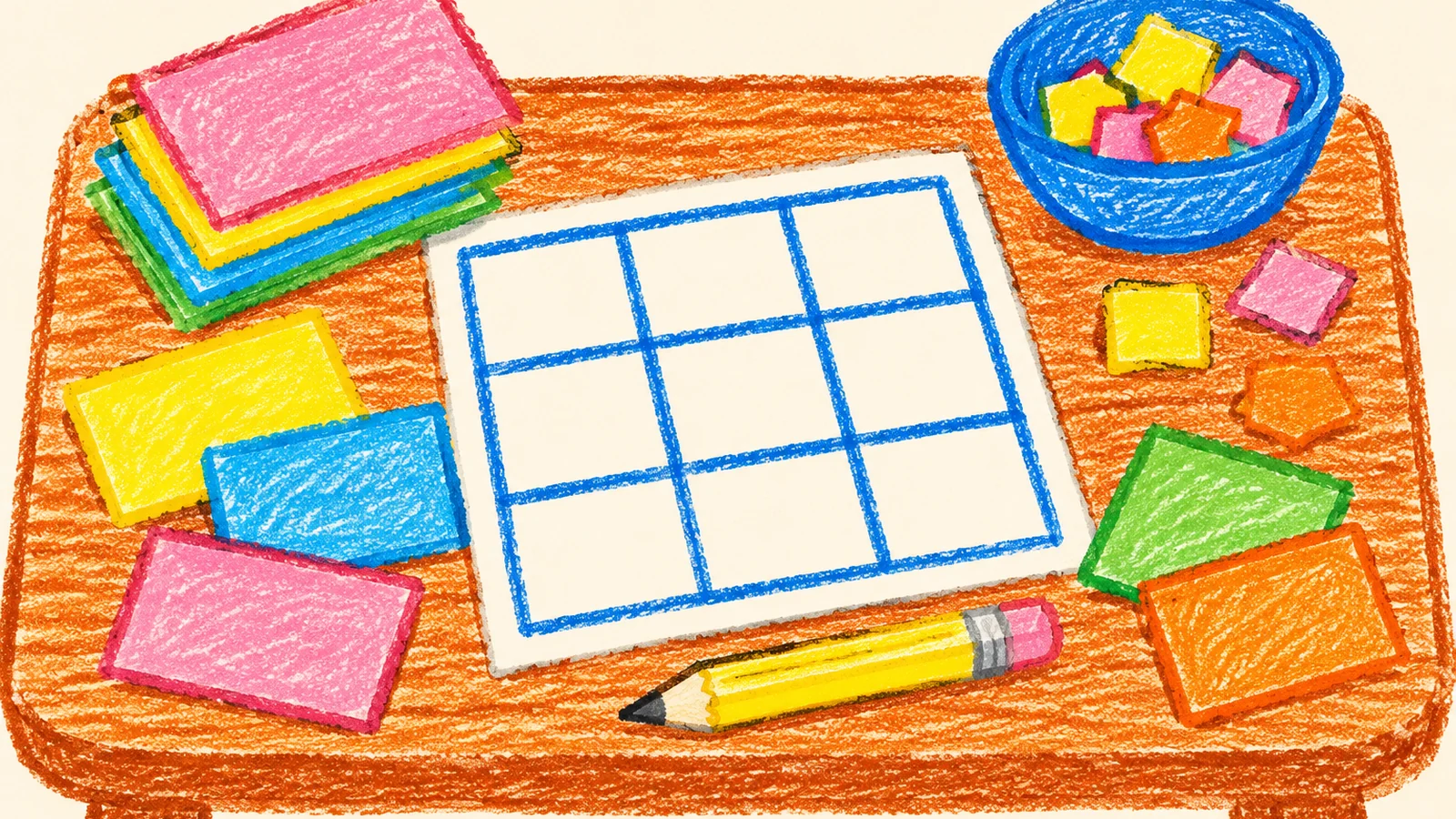
- Sight word bingo. Ages 5 to 7, 2 to 4 players, 10 to 15 minutes. Draw a 3 by 3 grid on a sheet of paper and write one sight word in each square. Make a separate pile of matching word cards. Call out a word and have players cover the matching square with a small piece of paper. The first player to cover a full row wins.
- Slap the word. Ages 5 to 8, 2 to 3 players, 5 to 10 minutes. Spread five to ten word cards across a table. Say one word aloud and let players race to touch the correct card. Give each player a turn to call the next word. Use gentle hands and spread the cards far enough apart to avoid arguments.
- Go fish with word cards. Ages 5 to 8, 2 players, 10 minutes. Make two cards for each sight word and shuffle them. Deal five cards to each player. Take turns asking for a matching word, such as "Do you have the word said?" If the other player has it, collect the pair. If not, draw a card.
- Roll and read. Ages 5 to 7, 1 to 3 players, 5 to 10 minutes. Write six sight words on a sheet of paper and number them from one to six. Roll a regular die, find the matching number and read its word aloud. If your child reads it correctly, mark the word with a pencil. Keep rolling until all six have been read.
- Word card memory. Ages 5 to 8, 1 to 3 players, 10 minutes. Make pairs of identical sight word cards and place them face down. Turn over two cards at a time. Your child reads both words and keeps the pair if they match. Start with three pairs, then add more as the game gets easier.
Movement games that get children reading
Got a child who prefers running to sitting with a pencil? Start with hopscotch or the scavenger hunt. You can play the same game with different words on another day, so there is no need to prepare a completely new activity each time.
- Sight word hopscotch. Ages 5 to 8, 1 to 3 players, 10 minutes. Write one sight word in each square of a hopscotch grid made with paper sheets. Call out a word and have your child hop to the correct square, then read it aloud. Use a clear floor area and tape down the paper to stop it sliding.
- Sight word scavenger hunt. Ages 4 to 8, 1 to 4 players, 10 to 15 minutes. Write five to ten words on separate slips and hide them around one room. Give your child a word to find. When they discover the matching slip, ask them to read it before searching for the next one. You can use a simple scavenger hunt for kids for more hiding and finding ideas.
- Flashlight words. Ages 5 to 8, 1 to 2 players, 5 to 10 minutes. Tape sight word cards to a wall or place them around a dim room. Let your child shine a flashlight on a word you call out. They must read the word before moving to another card. Keep the room bright enough for safe movement.
- Word parking lot. Ages 4 to 7, 1 to 3 players, 10 minutes. Draw several parking spaces on a large sheet of paper and write one word in each space. Give your child a small toy car. Call out a word and ask them to drive the car into the matching space, then read the word aloud.
- Find and touch. Ages 3 to 6, 1 to 4 players, 5 to 10 minutes. Place five large word cards on the floor or along a low wall. Say one word and ask your child to walk over and touch it. For children who are just starting, point to the word and say it together before asking them to find it again.
Quick games for solo play and small groups
For independent practice, leave a small group of familiar cards and a simple written instruction on the table. For a classroom, you can prepare several copies of the same game and let children take turns. Keep the rules short enough for them to follow without constant adult help.
- Missing word cards. Ages 5 to 8, 1 to 3 players, 5 minutes. Lay out five sight word cards and give your child time to read them. Ask them to close their eyes, then remove one card. They open their eyes and name the missing word. Add another card when they can remember the set easily.
- Sight word roll and cover. Ages 5 to 8, 1 to 2 players, 10 minutes. Write six words in a simple numbered grid. Roll a die and read the word beside that number. Cover it with a paper square if it is correct. The aim is to cover all six spaces.
- Make a silly sentence. Ages 6 to 9, 1 to 3 players, 10 minutes. Put five to ten sight word cards in a pile. Each player draws three cards and tries to make a funny sentence using those words. Write the sentence on paper and read it aloud. Help younger readers arrange the words in an order that makes sense.
- Word detective. Ages 5 to 9, 1 to 3 players, 10 minutes. Choose one target word and write it on a small card. Give your child a sheet of paper with several sight words written on it. Ask them to find and circle every appearance of the target word. Change the target word for another round.
- Beat the timer. Ages 6 to 10, 1 to 2 players, 5 minutes. Place ten word cards face up. Set a timer for one minute and ask your child to read as many as they can. Count the words read correctly, then repeat later with the same cards. Focus on accurate reading rather than beating a previous score.
Match each game to your child's reading level
The best sight word activities for kindergarten depend on how many words your child can already recognize. A child who knows five words needs a different challenge from one who can read twenty without stopping. Start with the level they can manage today.
For children aged 3 to 4, choose Find and Touch or a very simple version of the scavenger hunt. Use three to five large cards, say each word aloud and let your child match the card. Skip timed challenges and games with too many rules.
At ages 5 to 6, try bingo, Go Fish, hopscotch and Roll and Read. These games give children repeated chances to see the same words. If reading is still new, leave a matching example card in front of them.
Children aged 7 to 8 can handle memory games, sentence building and Word Detective. Ask them to read each word in a short sentence rather than only naming it on a card. You can use [sight word flashcards](https://123arc.com/sight-word-flashcards/) to prepare a fresh set for the next game.
For ages 9 to 10, add longer reading rounds, sentence challenges or a larger selection of words. Avoid making every game a race. Some children need extra thinking time, and accurate reading matters more than finishing first.
Keep your printable sight word games ready
You do not need to print a new activity every day. Make one small collection of word cards, a few bingo grids and blank sheets for drawing or writing. Store them in an envelope or folder so you can pull out a game when you have ten spare minutes.
If you want a ready-made set of words, try our [kindergarten sight words worksheets](https://123arc.com/kindergarten-sight-words/). You can use the words from your child's current reading practice to build matching cards for bingo, memory or Go Fish.
A simple weekly routine works well. Play a familiar game on Monday, introduce a different game on Tuesday and repeat the first one later in the week. Change two or three words at a time instead of replacing the whole set.
Keep an eye on how your child responds. If they start guessing, slow the game down and read the cards together. If they recognize every word straight away, add a few new ones. Put the cards away while the activity is still fun, and bring them back another day.
Questions parents ask
What are the easiest sight word games for kindergarten?
Sight word bingo, Find and Touch and Roll and Read are good starting points. Use five familiar words first, then add more when your child can recognize them without help.
How many sight words should I use in one game?
Start with 5 words if your child is learning to recognize them. Move up to 10 when the game feels easy, and keep a few familiar words in each new round.
How long should a sight word game last?
Most games work well in 5 to 15 minutes. Younger children often prefer shorter rounds, while older children may enjoy a longer bingo or sentence-building game.
More from the blog
All articles Never have I ever questions for kids: 100 clean ideasTry 100 clean never have I ever questions for kids ages 6 to 12, with easy rules and fun categories for classrooms, parties and sleepovers.
 100 truth or dare questions for kids, clean and sillyGet 50 kid-friendly truth questions and 50 silly dares for sleepovers, family nights and parties, plus simple rules and printable game ideas.
 Journal prompts for kids: 100 ideas for ages 6 to 10Use these 100 journal prompts for kids ages 6 to 10 to build a five-minute writing habit with fun questions about feelings, school and everyday life.