Games8 min read
100 truth or dare questions for kids, clean and silly
Get 50 kid-friendly truth questions and 50 silly dares for sleepovers, family nights and parties, plus simple rules and printable game ideas.
 By the 123arc teamPublished Nov 28, 2026

Contents
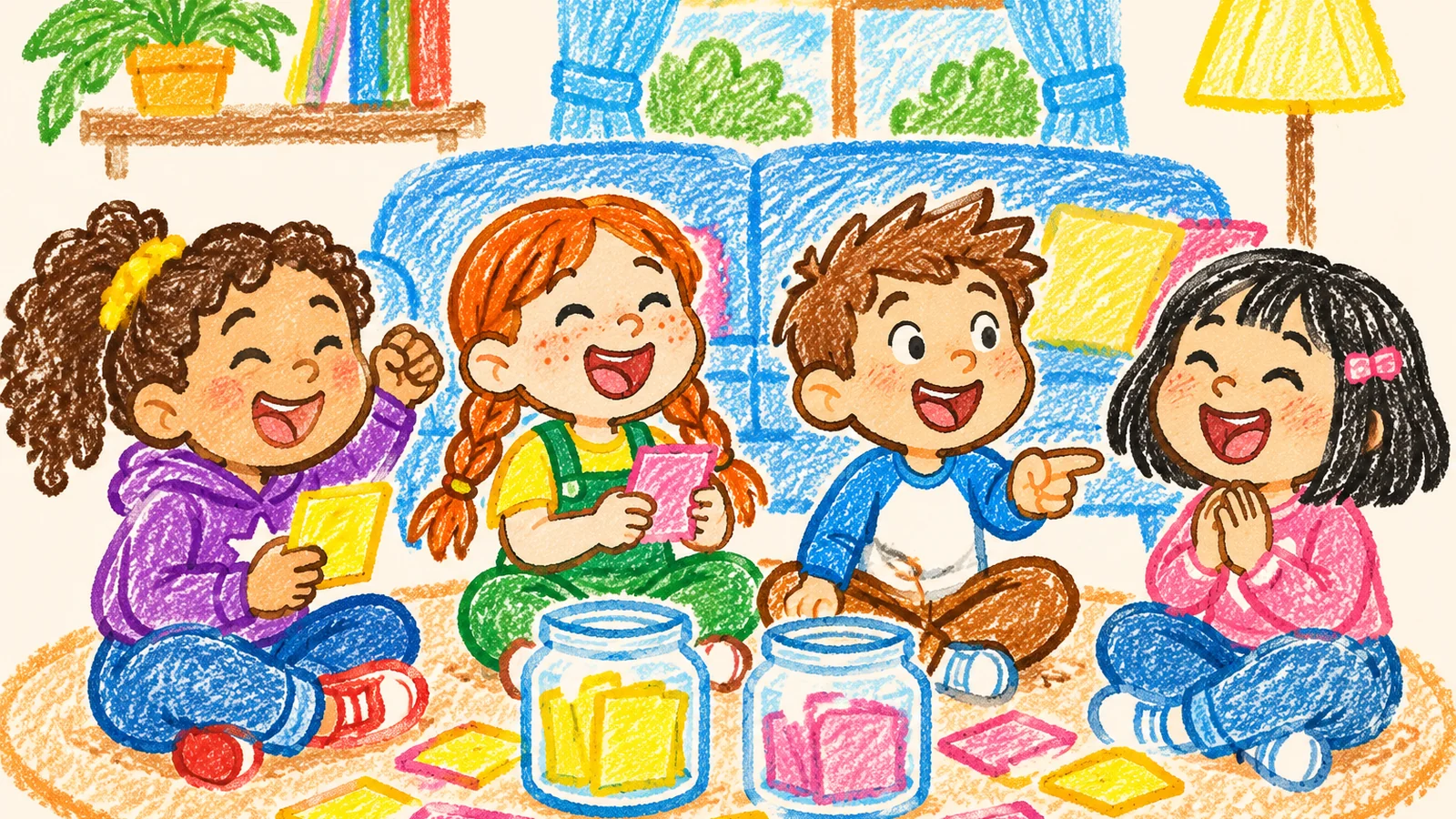
These truth or dare questions for kids include 50 truths and 50 silly dares that are safe for ages 6 to 12. You can use them at sleepovers, family game nights or birthday parties, with no food challenges, dangerous stunts or embarrassing anyone.
If you are planning an evening with a few friends or need a game for a rainy afternoon, this one takes almost no preparation. All you need is the questions, a little space to move around and a rule that everyone can pass whenever they want. Younger children can play with a grown-up reading the cards.
Set a few ground rules before you start
Agree on the rules before the first player chooses truth or dare. Anyone can pass on a question or challenge without explaining why. Nobody should tease another player about an answer, and nobody has to share a private family matter or a secret that could hurt someone.
Keep every dare indoors and away from stairs, windows, electrical outlets and breakable objects. Skip anything involving food, phones, heights, personal belongings or another person's appearance. A silly game should leave everyone laughing, not wishing they had stayed home.
For children aged 6 to 8, have an adult read the cards and explain anything confusing. Older children can take turns being the reader. If a challenge feels uncomfortable, swap it for another one.
- Everyone gets one free pass whenever they need it.
- No filming, posting or sharing another player's answers.
- No dares involving pain, mess that someone else must clean up or risky movement.
- Be kind about every answer, even the surprising ones.
Truth questions for sleepovers
Sleepovers are a good time for questions about friendships, funny memories and little preferences. Keep the mood light, especially if children in the group have only recently met.
- What is the funniest dream you can remember?
- Have you ever talked to a pet as if it could answer?
- What is the silliest nickname someone has given you?
- If you could have any animal as a pet, what would you choose?
- What is one thing that always makes you laugh?
- Have you ever worn two different socks without noticing?
- What would your dream bedroom look like?
- Which cartoon character would you invite to a sleepover?
- What is the strangest thing you have ever collected?
- If you could stay awake all night doing something fun, what would it be?
- What song do you secretly love singing?
- Have you ever laughed at a joke you did not understand?
- What is your funniest school memory?
- If you could invent a new holiday, what would it celebrate?
- What would you name a pet dinosaur?
- What is something you are really good at?
- If your pillow could talk, what would it say about you?
Truth questions for family nights
Family nights work best with questions that children and adults can answer together. Take turns around the room, and let grown-ups answer too. Children often enjoy discovering that adults have silly answers of their own.
- What is your favorite family tradition?
- Who in the family tells the funniest jokes?
- If you could plan our next family outing, where would we go?
- What is the funniest thing you have seen a family member do?
- Which family meal would you happily eat every week?
- If you could trade places with someone in the family for a day, who would it be?
- What is one new skill you would like to learn?
- Which animal best describes your personality?
- What is your favorite thing to do on a rainy day?
- If our family had a band, what would its name be?
- What is the silliest thing you believed when you were younger?
- Which fictional character would make the best family guest?
- What is one thing that makes you feel proud?
- If you could give everyone in the family a superpower, what would you choose?
- What is the funniest word you know?
- Which family member would survive best on a desert island?
- What is something kind someone did for you recently?
Truth questions for birthday parties
Party questions should be easy to answer without putting anyone on the spot. These work well with classmates, cousins and groups of friends who have different personalities.
- If you could be famous for one thing, what would it be?
- What is your favorite ice cream flavor?
- Would you rather fly or become invisible?
- What would you do with a friendly robot for one day?
- Which season would you choose if you could have it all year?
- What is the funniest animal sound you can make?
- If you opened a shop, what would you sell?
- What is the strangest name you would give a stuffed animal?
- Which superpower would be the most useful at school?
- If you could visit any imaginary place, where would you go?
- What is one thing you wish you could do without practicing?
- Would you rather explore space or the bottom of the ocean?
- What would your superhero name be?
- If you could invent a new flavor of candy, what would it taste like?
- What is the funniest face you can make?
- Which game would you choose for a whole afternoon?
Silly dares for sleepovers
These sleepover dares are quiet enough for a living room or bedroom. You can use them between conversations or whenever the group needs a little burst of laughter.
- Talk like a robot for the next two turns.
- Pretend to be a sleepy bear waking up.
- Sing your favorite song in a tiny mouse voice.
- Make up a funny bedtime story in 30 seconds.
- Walk across the room like a penguin.
- Pretend your pillow is a very important guest.
- Invent a secret handshake with the player beside you.
- Say the alphabet in your funniest voice.
- Act like a cat asking for attention.
- Make three different silly faces.
- Describe your favorite toy as if it were a famous celebrity.
- Pretend to brush your teeth using an invisible toothbrush.
- Make up a new dance while sitting down.
- Speak in rhymes for one full turn.
- Pretend you are a weather reporter announcing a pillow storm.
- Tell a joke using your quietest whisper.
- Act out getting ready for bed in slow motion.
Silly dares for family nights
Family dares should be easy for younger children and funny enough for older players. Most of these need no props, so you can start right where everyone is sitting.
- Pretend to be a chicken laying an invisible egg.
- Give a 20-second speech about why socks are wonderful.
- Draw an imaginary picture in the air with your nose.
- Try to say a tongue twister three times.
- Pretend you are a newsreader reporting on a missing teddy bear.
- Make up a new family greeting.
- Act like a robot that has run out of battery.
- Describe an ordinary spoon as if it were a magical treasure.
- Pretend to conduct an orchestra without making a sound.
- Balance an imaginary book on your head for 15 seconds.
- Invent a funny name for each person in the room.
- Pretend you are swimming through invisible jelly.
- Sing a familiar song using only animal sounds.
- Act like a very surprised frog.
- Tell a short story using the words banana, spaceship and dinosaur.
- Pretend to walk through an invisible wall.
- Give everyone a compliment in a silly announcer voice.
Silly dares for birthday parties
Party dares are best when everyone can watch and join in without feeling singled out. Let players choose their own performance style, and keep each turn short so the game moves along.
- Dance like a wiggly spaghetti noodle for 15 seconds.
- Pretend to be a famous chef describing an imaginary cake.
- Make the sound of three different farm animals.
- Act like a superhero arriving to save a teddy bear.
- Say your name backwards as best you can.
- Pretend to be a dinosaur looking for its lunch.
- Invent a new dance move and give it a name.
- Speak like a pirate for the next two turns.
- Pretend the floor is made of soft marshmallows.
- Make up a commercial for an invisible hat.
- Act out brushing your hair with an imaginary banana.
- Pretend you are a statue in an art museum.
- Give a dramatic speech about your favorite pencil.
- Walk in place like you are marching in a parade.
- Pretend to be a monkey learning ballet.
- Make up a three-line song about the birthday cake.
How to make truth or dare cards or a question jar
You can turn all 100 prompts into a simple game with paper, scissors and two containers. A card version works well for parties because children can pick a question themselves. A jar is handy for family nights when you want everyone to take turns drawing a surprise.
For printable cards, copy each truth and dare onto separate pieces of paper. Use one color for truth cards and another for dares. Keep the writing large enough for children to read, or add a small picture beside each prompt. Cut the cards out and place them in two piles.
For a jar version, write each question on a folded slip of paper. Put truths in one jar and dares in another. A player chooses which jar to draw from, reads the slip aloud and decides whether to answer or complete the challenge. Passing is always allowed.
Want to keep the evening going after the last card? Try Would you rather questions for kids for another round of funny conversations. You can also use an indoor scavenger hunt when the group needs a break from sitting around.
For younger players, start with 10 to 15 cards rather than putting all 100 on the table at once. Let children help decorate the cards before the game. Keep the unused prompts for another evening.
Questions parents ask
What age is truth or dare suitable for?
These questions are written for children aged 6 to 12. Younger children can join with an adult reading the prompts and helping them understand the rules.
How do you play truth or dare with kids?
Players take turns choosing truth or dare. A truth means answering a question, while a dare means completing a silly challenge. Everyone can pass without giving a reason.
How do you make truth or dare safe for children?
Keep questions kind and challenges indoors, with no dangerous stunts, food challenges or personal secrets. Make passing an accepted part of the game, and stop any challenge that makes a player uncomfortable.
More from the blog
All articles Journal prompts for kids: 100 ideas for ages 6 to 10Use these 100 journal prompts for kids ages 6 to 10 to build a five-minute writing habit with fun questions about feelings, school and everyday life.
 Pen and paper games for kids: 15 fun ideas to playTry 15 pen and paper games for kids ages 5 to 12. Get simple rules, paper suggestions and fun ideas for restaurants, road trips and rainy days.
 Kindergarten centers: 12 ideas that run themselvesSet up 12 kindergarten centers with simple materials, picture directions and weekly changes. Includes a four-group rotation schedule.