Learning7 min read
Sight words practice at home in 10 minutes a day
Try this 10-minute sight word routine with five new cards each week, quick review piles, writing practice, and a Friday bingo game.
 By the 123arc teamPublished Oct 15, 2026
Contents
Sight words practice at home can take just 10 minutes a day. Pick five words for the week, review them with two card piles, practice reading and writing, and finish Friday with a game.
If your preschooler guesses every word or your first grader gets frustrated with flashcards, this routine gives you a place to start. You need a few index cards, a pencil, some paper, and a quiet spot at the kitchen table. No expensive reading kit or hour-long lesson.
Start with the right sight word list for your child
Before you make any flashcards, choose words that match what your child is learning. A list that is too difficult can turn a quick reading activity into a daily argument. Start with words your child has seen before, then add a few that are new.
For pre-K children, the Dolch pre-primer list is a reasonable starting point. It includes familiar words such as the, a, and, see, and me. Kindergarten children can work through the Dolch primer list, which includes words such as came, good, and want. For first graders, the first 100 Fry words offer another useful starting point.
These are starting suggestions, not strict grade rules. If your child's teacher sends home a different list, use that one first. And if your kindergartener still needs pre-primer words, that is perfectly fine. A child who can read five words confidently is better prepared for the next five than one who has rushed through twenty.
You can print Dolch sight words flashcards to get started without writing every card yourself. Keep your first set small enough to fit in one hand.
Follow the same 10-minute routine every day
Choose a time your child is usually alert. Right after a snack often works better than the last few minutes before bed, especially for younger children. Put the cards, pencil, and paper in one small folder so you are not searching for supplies every afternoon.
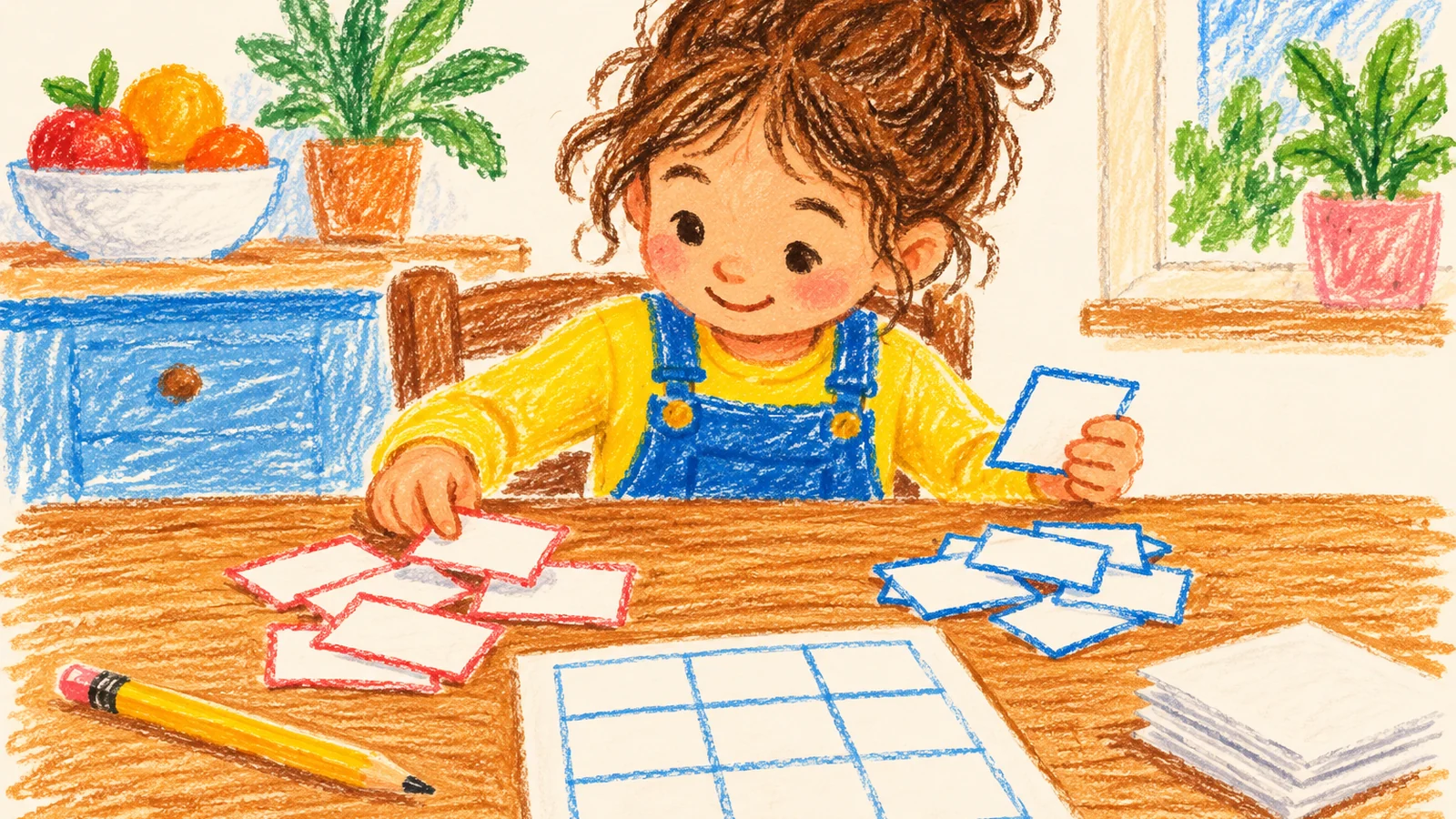
Spend the first two minutes reviewing familiar words. Use the next three minutes for your five weekly words, showing each card and asking your child to read it. Spend three minutes on read-trace-write practice, then use the final two minutes for a quick game or another look at the difficult words.
For example, Monday might begin with the words I, see, the, my, and can. Show each card, say the word clearly, and have your child repeat it. Then ask them to find the word see in a short sentence such as I see my cat. Reading the word inside a sentence helps your child connect the card to an actual book.
Keep the order familiar, but change the final activity when your child gets bored. One day they can point to the word you say. Another day they can arrange three cards into a sentence. Ten focused minutes are enough for today's practice, so stop when the timer rings.
Use a fast pile and a slow pile for flashcards
The two-pile method is my favorite way to keep sight word practice manageable. Put a card in the fast pile when your child reads it correctly without a long pause. Put it in the slow pile when they hesitate, guess, or need help. You are sorting words, not judging your child.
Start each session with the fast pile. Your child gets to read words they already know before tackling the harder ones. Then take two or three cards from the slow pile and practice them carefully. Say the word, look at its letters, and have your child read it again.
A word can move between piles. If your child reads where correctly on Monday but forgets it on Wednesday, put it back in the slow pile. That's normal. Keep familiar cards available for occasional review, even after they leave the weekly set.
Want a quick change of pace? Place three cards on the table and ask your child to touch the word you say. Switch their positions between turns so they must look at the letters instead of remembering where the card sits. Try this with your Sight word flashcards printable set.
Practice each word with read, trace, and write
Some children can say a sight word on a flashcard but struggle to recognize it on a worksheet. Adding a little writing gives them another chance to look closely at the letters. You do not need a complicated workbook. A sheet of paper divided into three columns works.
Write Read, Trace, and Write across the top. In the first column, print the target word clearly. In the second, write it lightly for your child to trace. Leave the third column empty so they can try writing it independently. For younger children, start with just one or two words per sheet.
Use the word said as an example. Ask your child to read it, point to each letter, and notice the ai in the middle. Explain that this part does not sound the way they might expect. Then let them trace said and write it once while saying the word aloud.
If handwriting is still tiring, let your child build the word with letter tiles before using a pencil. You can also use Primary handwriting paper printable for larger writing spaces. The aim is to recognize and spell the word, not produce perfect handwriting.
One careful attempt is more useful than a whole page of rushed copying. If your child is getting tired, finish with reading instead.
Make Friday sight word bingo day
By Friday, your child has seen the same five words several times. This is a good day to replace the usual drill with bingo. It feels like a game, but you can still see which words your child recognizes without help.
Draw a three-by-three grid on paper. Fill the nine spaces with this week's five words and four familiar words from earlier weeks. Read a word aloud and let your child cover the matching square with a button, small paper circle, or pencil mark. Three covered squares in a row wins.
For preschoolers, use a smaller grid with four spaces. For children who are ready for more, ask them to read the word aloud before covering it. You can also swap roles and let your child call out the words while you find them.
Our Sight word bingo printable is handy if you would rather print a game than draw one. Keep Friday lighthearted. If your child misses a word, show it, read it together, and continue playing.
At the end of the game, check which words still need practice. Carry those into next week instead of automatically replacing all five cards.
What to do when a sight word will not stick
Every parent eventually meets a word that seems to disappear from their child's memory overnight. Maybe your child reads was correctly six times, then calls it saw the next morning. Repeating the same flashcard twenty more times usually makes the session frustrating.
First, cut back the number of new words. If five are too many, work with three for a week. Show the difficult word beside a familiar one and point out what makes them different. With was and saw, for example, compare the letter order and read each word slowly together.
Next, use the troublesome word in a short sentence. Write The dog was wet, read it aloud, and ask your child to find was. Then cover the sentence and show the single word again. This gives your child a chance to recognize the word both in context and by itself.
You can also try a movement game. Tape three word cards to a wall, say one aloud, and ask your child to walk over and touch it. For a child who dislikes sitting still, two minutes of movement can make practice feel less like another worksheet.
Look, if the same word is still difficult after several days, keep it in the slow pile and move on with the rest of the routine. Ask your child's teacher how they introduce that word, especially if your child is struggling with several words or finding reading unusually upsetting. Consistent short practice is better than ending every afternoon in tears.
Questions parents ask
How many sight words should my child learn each week?
Start with five new words a week if your child is comfortable with the routine. If they are struggling, use two or three and spend more time reviewing familiar words.
Should my child sound out sight words?
Yes, help your child connect letters to sounds wherever possible. Some common words have unexpected spellings, so point out the unusual part instead of asking your child to memorize the whole word as a picture.
What if my kindergartener cannot remember sight words?
Practice fewer words, review them briefly each day, and use them in simple sentences. If progress remains difficult, talk with your child's teacher about their phonics skills and the best next steps.
More from the blog
All articles Color by number for kids: what it teaches and how to chooseLearn what color by number for kids can teach and how to choose pages that fit your child's age, skills, and attention span.
 How to teach a child with a word search for kidsLearn when children are ready for word searches, how to teach the steps, and how to create spelling puzzles they can enjoy at home.
 Mazes for kids: Best sizes by age and solving tricksFind the right maze size for ages 4 to 10, teach simple solving tricks, and build a weekly practice routine that keeps kids interested.