Learning6 min read
Morning work kindergarten: a five-minute routine that runs itself
Build a calm kindergarten arrival routine with five-minute printables, one task each day, and simple habits that help children start work independently.
 By the 123arc teamPublished Oct 25, 2026
Contents
Morning work kindergarten routines work best when children know exactly what to do as soon as they arrive. A five-minute printable activity each morning, repeated in the same order every week, gives kindergartners a calm start while you greet families, take attendance, or help a child settle in.
This plan is for kindergarten teachers, parents, and caregivers who want useful arrival activities without preparing a new lesson every night. You will use sight word tracing, dot to dot, a letter page, color by number, and Friday bingo. The activities change, but the routine stays the same.
Why five minutes is enough for morning work
Kindergartners are still learning how to unpack a backpack, find a pencil, follow a classroom direction, and get started without an adult beside them. Asking for 20 minutes of independent work right after arrival can turn a peaceful morning into a string of interruptions. Five minutes gives children a manageable first job and gives you a little breathing room.
The goal is not to finish a worksheet at any cost. You want children to enter the room, put away their belongings, find their paper, and begin. Some children will finish quickly, while others will need the whole five minutes to trace a few words or work through a small puzzle. Both are fine.
Keep the task short enough that a child can see the finish line. If your class needs eight minutes during the first week, allow eight. Once the routine feels familiar, shorten the time gradually.
Use the same five-day schedule every week
Choose one activity for each day and keep that assignment in place for several weeks. Children begin to remember Monday's tracing sheet and Tuesday's dot to dot before they can read every direction on the page. That familiarity cuts down on questions and gives you fewer materials to explain.
Here is a simple weekly plan. Pick pages that match the skills your class is practicing, and resist the urge to replace every activity with something new.
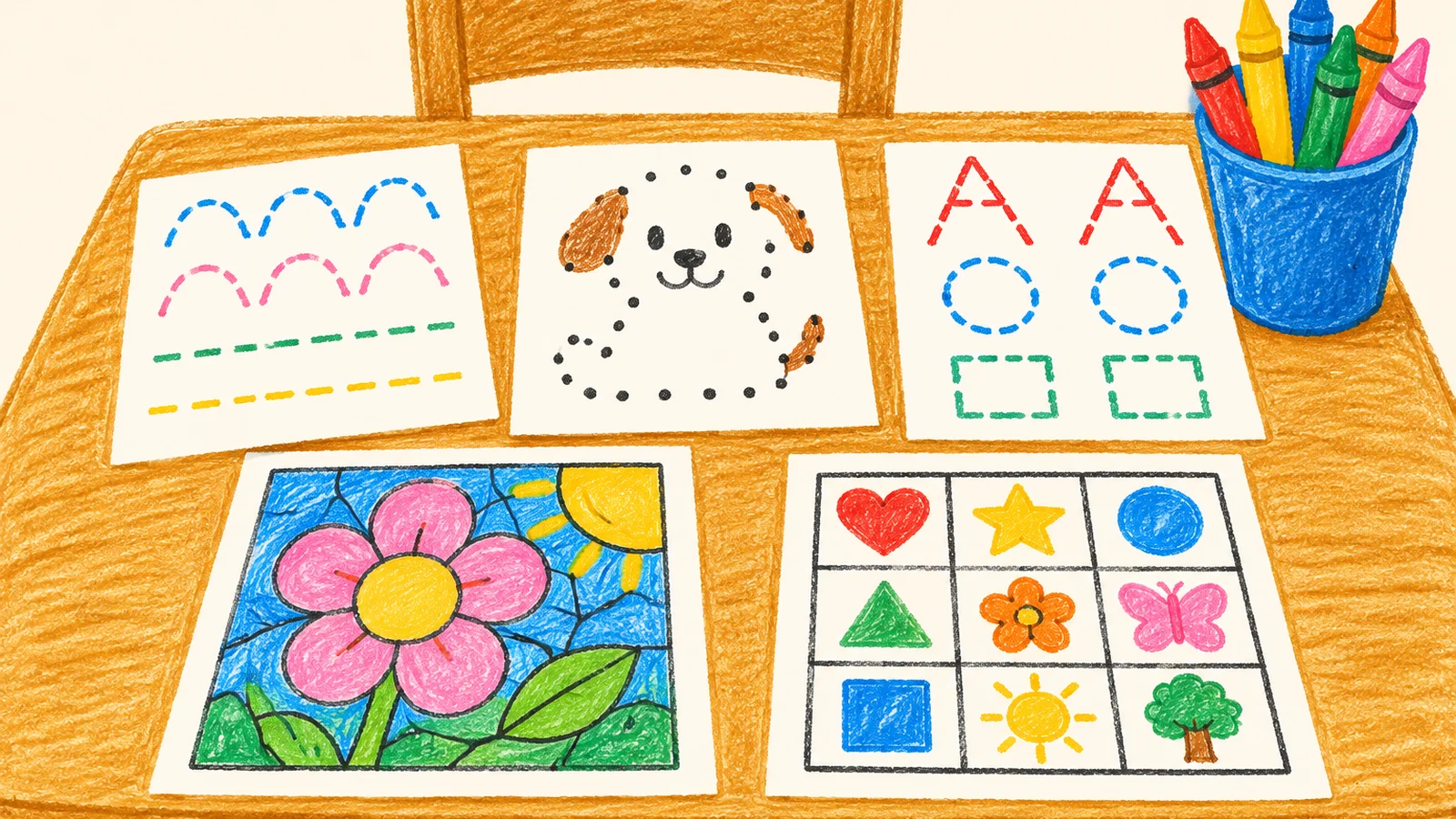
- Monday: Children trace a short sight word sheet with familiar words such as "the," "and," or "is."
- Tuesday: Children complete a dot to dot with a clear starting point and a manageable number of dots.
- Wednesday: Children practice one letter by tracing it, writing it, or finding it among other letters.
- Thursday: Children finish a color by number printable with about 10 numbered spaces.
- Friday: Children play a simple bingo game using familiar letters, numbers, or sight words.
Make Monday's sight word sheet easy to start
Monday can feel like a fresh start after the weekend, so begin with a page children recognize. Choose three to five sight words that have already appeared in class. Give each word a tracing example and a little room to try writing it independently. If your students are not ready to write the words alone, tracing is enough for the arrival task.
For a class working on early reading, Sight word flashcards printable can help you review the same words during another part of the day. Keep the arrival sheet focused on the week's target words rather than turning it into a full reading lesson.
Show children what to do with one quick demonstration before the first Monday. Point to the first word, trace it, and move to the next line. After that, leave the directions on the board or place a finished example beside the paper. You want students to check the example instead of waiting for you.
Choose printables that children can manage alone
A printable only works as independent morning work if children can understand the task without an adult reading every instruction. Look for large pictures, clear lines, familiar symbols, and enough white space for small hands. Skip pages with crowded details or several steps that need explaining.
For Tuesday, Dot to dot printables offer a natural way to practice number order and pencil control. Pick a short activity with dots that are easy to see. If a child loses track, teach them to return to the last number they connected instead of starting over.
Wednesday's letter page should match what children have already practiced. You might use a page with one uppercase and one lowercase letter, a few tracing lines, and a small space to circle that letter. For children who still find pencil work difficult, offer a thicker crayon or a short pencil that is easier to grip.
On Thursday, use Color by number printable pages with roughly 10 cells or spaces. Choose a design with only a few colors and a key that children can follow. A complicated picture with tiny sections will take too long and may leave students frustrated before the school day has properly begun.
Set up the room so you do not have to direct every child
Prepare the materials before children arrive. Put each day's sheet in a labeled tray, or place it at each child's usual seat. Keep pencils and crayons in the same spot every morning. When children have to ask where the paper or supplies are, the routine depends on you again.
Teach the arrival steps separately from the academic activity. During the first few days, model how to hang up a backpack, put away a lunchbox, collect the page, and begin working. Practice what to do when the task is finished, too. Children can place the paper in a finished-work basket and choose a quiet book while they wait.
What about children who arrive late or need extra help? Leave a small number of spare sheets in the tray, and do not make a child rush to catch up. A late arrival can complete the first part of the task or join the next classroom activity when needed.
Use the same brief reminder each morning, such as "Unpack, pick up your page, and get started." Once children know the sequence, you can spend your attention on the people who need it most.
Keep Friday fun without changing the routine
Friday bingo gives children a social activity to look forward to while keeping the arrival routine familiar. Use a small board with letters, numbers, or sight words the class already knows. Children can work on a simple matching sheet first, or play quietly with a partner once enough classmates have arrived.
Explain how the game works before Friday morning. For a quiet individual version, call out a letter or word from a small list and let children mark the matching square. For a partner version, one child points to a word while the other finds it. Keep the game short, and save any longer group play for later in the day.
The thing to avoid is making Friday so exciting that Monday through Thursday feel like chores. Each day has a purpose, and each activity should be easy to begin. If bingo creates too much noise during arrival, use it as a later classroom center and give Friday a familiar tracing or matching sheet instead.
After two weeks, check which pages children can start without help. Keep those formats, replace activities that cause confusion, and adjust the difficulty to suit your class. Consistency matters more than finding five completely different activities every week.
Questions parents ask
How long should kindergarten morning work take?
Start with five minutes and adjust to your class. The task should be short enough for children to begin independently while you handle attendance and arrivals.
What are easy morning work ideas for kindergarten?
Try sight word tracing, a short dot to dot, letter practice, a small color by number page, and simple bingo. Choose activities that use skills children have already practiced.
How do I get kindergarteners to start morning work independently?
Keep the materials in the same place and teach the arrival steps one at a time. Model the routine, show a completed example, and give children a quiet task to do when they finish.
More from the blog
All articles Early finisher activities that do not need gradingBuild a ready-to-use binder of early finisher activities with printable mazes, word searches, color by number and dot to dots kids can check themselves.
 Emergency sub plans: a one-hour printable block for any gradeUse these emergency sub plans to fill 60 minutes with printable activities, a class trivia game, simple grade adjustments, and clear folder notes.
 Restaurant activities for kids: what to print before you goKeep kids busy at a restaurant with four easy printables, simple packing tips, and age-friendly ideas for toddlers and older children.